
What Car Accessories Do I Need? 17 Proven Essentials Every Driver Should Have
Here’s my honest answer to what car accessories do I need: a lot fewer than the 30-item checklists floating around the internet suggest. A short list covering safety, comfort, and convenience handles the real risk and the real daily annoyance for a few hundred dollars total, and everything past that is optional upgrade territory, not necessity. Below is a practical rundown organized by category, with realistic price ranges so you know what to expect — these are the picks I’d actually put my own money into.
Contents
Emergency and Safety Essentials
This is the category I’d never skip, no matter how tight the budget. A basic first aid kit ($15–$30) covers cuts, burns, and bruises until help arrives, and a roadside emergency kit ($25–$60) with jumper cables, reflective triangles, and a flashlight handles breakdowns and flat tires — it matters most at night or in bad weather when visibility is already limited.
A small automotive-rated fire extinguisher ($20–$40) can stop an electrical or fuel-related fire from spreading; mount it securely so it doesn’t roll around the trunk, and check the pressure gauge once a year. A tire pressure gauge ($8–$20) takes seconds to use and catches a slow leak before it becomes a roadside blowout.
A portable jump starter ($50–$120) lets you restart your own car without flagging down a stranger, and most models double as a USB power bank. None of this is exotic gear — it’s roughly the same baseline FEMA’s car emergency kit guidance recommends, and I keep every item on this list in my own trunk.
Convenience and Comfort
A phone mount ($10–$25 — magnetic or vent-clip styles hold up best over time) keeps navigation visible and your hands free. Lumbar support cushions ($20–$50) reduce lower-back strain on long drives, particularly in older cars where the seat bolstering has worn down.
A reflective sunshade ($10–$20) meaningfully cuts interior temperature on hot days and slows dashboard UV fading, which matters more than most people realize if you’re planning to sell the car eventually. A cordless handheld vacuum ($30–$80) isn’t essential the way a first aid kit is, but it makes it realistic to actually clean the car regularly. That habit alone does help preserve resale value.
Tech and Entertainment
A multi-port USB fast charger ($10–$25) is worth it if your car predates USB-C ports. Older vehicles without Bluetooth benefit from a simple Bluetooth receiver ($15–$30) that plugs into the AUX port or 12V socket.
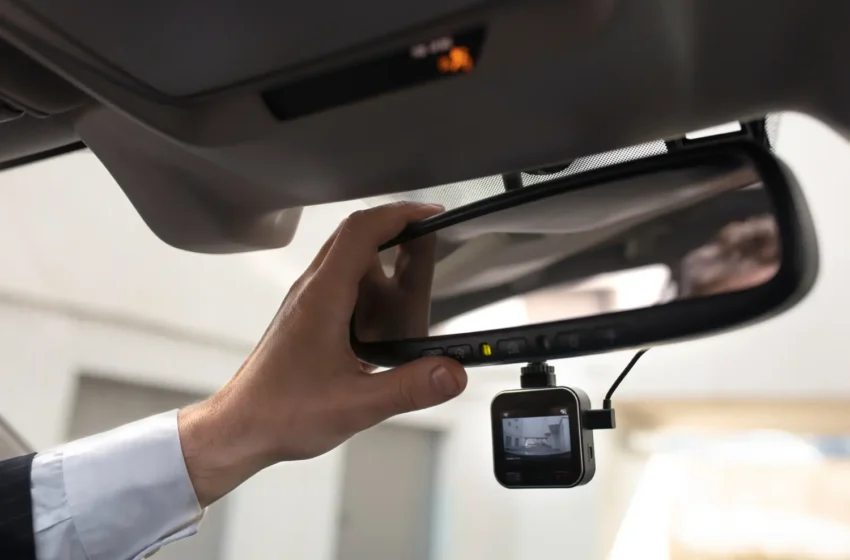
A dash camera ($40–$150 for a solid single-channel model, more for front-and-rear setups) is genuinely one of the higher-value additions on this list — it provides real evidence in an accident or insurance dispute, and I’ve seen it settle a fault argument within minutes. A GPS tracker ($20–$50 plus a small monthly data fee) adds theft-recovery odds and is commonly used by parents of new teen drivers.
Cleaning and Maintenance
Microfiber cloths (a dozen-pack runs $10–$15) are the safest option for glass and screens since they won’t scratch. A flexible windshield cleaning tool ($10–$15) reaches corners a regular cloth can’t. A portable 12V air compressor ($25–$50) means you’re never stuck with a low tire far from a gas station, and most have a built-in gauge so you can inflate to the exact PSI listed on your door jamb sticker.
Cleaning gel ($5–$10) is handy for vents and console crevices, but it’s a minor nice-to-have, not essential — one thing I always tell people is to spend their first cleaning-supply dollars on the air compressor, not the gel.
Organization
A collapsible trunk organizer ($15–$35) stops groceries and gear from sliding around and is one of the more genuinely useful low-cost additions here. Backseat storage pockets ($15–$30) help a lot with kids in the car. A console organizer tray ($10–$20) keeps small items from disappearing under the seats.
Seasonal and Weather
In snowy climates, a sturdy ice scraper with a brush ($8–$15) and, for SUVs and trucks, a telescoping snow brush ($15–$25) are non-negotiable. All-weather rubber floor mats ($40–$100 for a full set) protect the factory carpet from salt, mud, and snowmelt far better than fabric mats, and they matter in any climate that sees real rain or winter weather, not just the snowy ones.
What Car Accessories Do I Need at a Glance
| Category | Top Picks | Price Range |
|---|---|---|
| Emergency & Safety | First aid kit, roadside kit, fire extinguisher, tire gauge, jump starter | $8–$120 |
| Convenience & Comfort | Phone mount, lumbar cushion, sunshade, handheld vacuum | $10–$80 |
| Tech & Entertainment | USB charger, Bluetooth receiver, dash camera, GPS tracker | $10–$150 (+ data fee) |
| Cleaning & Maintenance | Microfiber cloths, windshield tool, air compressor, cleaning gel | $5–$50 |
| Organization | Trunk organizer, backseat pockets, console tray | $10–$35 |
| Seasonal & Weather | Ice scraper, snow brush, floor mats | $8–$100 |
What to Prioritize First
If you’re starting from nothing, here’s the thing: the highest-value first purchases are a roadside emergency kit, a tire pressure gauge, a dash camera, and all-weather floor mats. Those four cover real safety and financial risk for relatively little money. Everything else on this list is a comfort upgrade you can add over time, as your budget allows.
What I Wouldn’t Buy First
I wouldn’t recommend leading with the tech category, tempting as a dash camera or GPS tracker sounds. They’re useful, but they don’t prevent a breakdown or protect you from being stranded, and that’s the risk worth covering first. I also wouldn’t bother with cleaning gel or a backseat organizer before you’ve got a first aid kit and a tire gauge in the car. They’re nice, not necessary, and a lot of the 30-item accessory lists online blur that distinction on purpose just to pad out the word count.
Conclusion
You don’t need all 17 items on day one. Start with the safety and weather-protection basics, then add comfort and tech accessories as your budget and daily driving needs call for them. If I had to reduce this whole list to one rule, it’s this: if an accessory doesn’t reduce a real risk or a real daily annoyance, it can wait.
For more accessory and upgrade ideas, check out my related page on car modifications and customization.