

Timing Chain BMW 3 Series Guide: E46 to G20 Engines
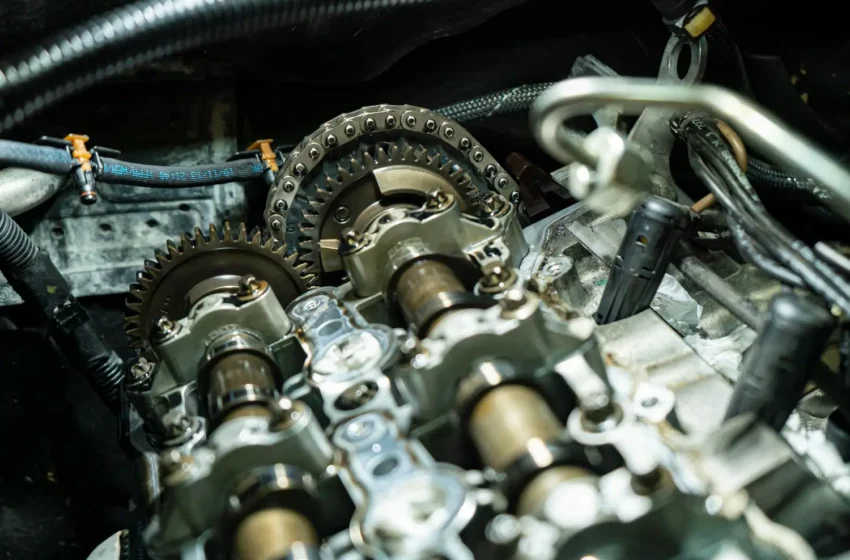
This guide provides a complete overview of the BMW 3 Series timing chain systems, covering models from E46 to G20. This article clearly explains common issues, maintenance intervals, and replacement costs.
The timing chain BMW 3 Series engines use is designed to last the life of the engine, but wear patterns and design differences across generations influence actual reliability. Some engines — especially early diesels — have well‑documented issues that owners should be aware of.
Contents
Timing Chain Diagrams & Visual Reference
Below are helpful diagrams showing typical timing chain layouts used in various BMW 3 Series engines.
Chain Drive Overview
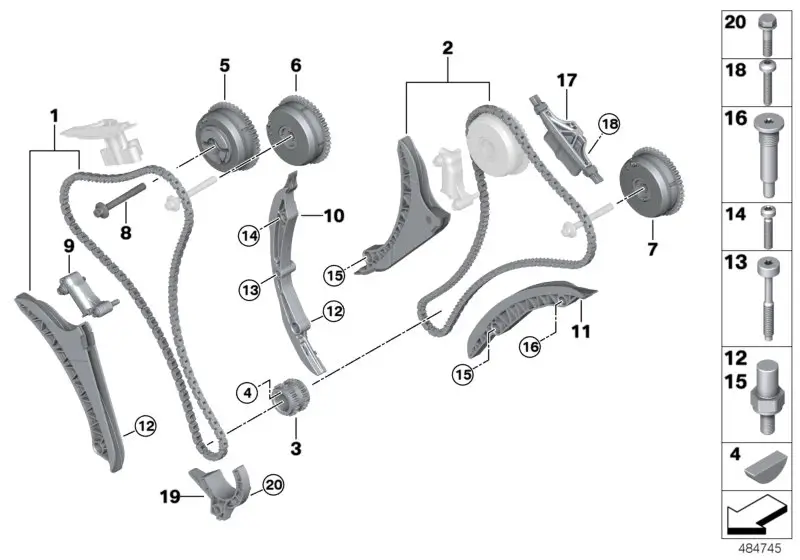
Typical components in a BMW timing chain system include the main chain, guide rails, and tensioners, which keep the chain aligned and under proper tension.
F30/N20 Timing Chain Parts
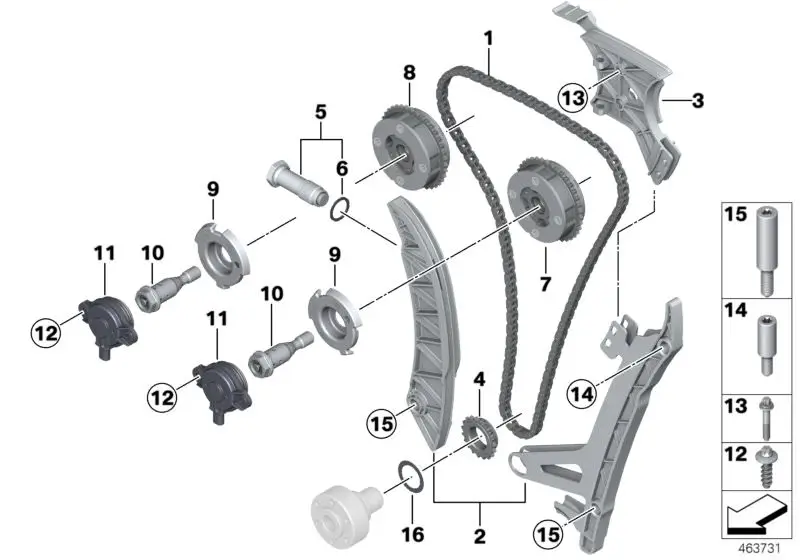
This diagram shows a typical timing chain assembly for a 3 Series F30 engine, such as the N20 or B48 configuration.
BMW 3 Series Generations & Timing Chain Risk
| Generation | Years | Main Engines | Timing Chain Risk |
|---|---|---|---|
| E46 | 1998–2006 | M52, M54 | Low |
| E90 / E91 / E92 | 2005–2013 | N43, N46, N47, N52 | High risk (N47) |
| F30 / F31 | 2012–2019 | N20, N47, B48, B58 | Medium (early N20/N47) |
| G20 | 2019–Present | B48, B58 | Low |
Diesel engines like the N47 have had the most reports of premature chain wear, especially when maintenance is irregular.

How BMW Timing Chains Work
The timing chain connects the crankshaft to the camshaft(s), synchronizing valve timing for optimal engine performance. Unlike a timing belt, a chain is metal and designed for greater longevity, lubricated automatically by engine oil.
However, as chains wear, they can stretch or develop slack. Components such as plastic guides and hydraulic tensioners can wear or fail over time, contributing to misalignment and mechanical stress.
Common Timing Chain Problems & Symptoms
Typical warning signs that a timing chain is deteriorating include:
- Rattling or ticking noise during cold start — often a sign of slack or worn guides.
- “Check Engine” light for camshaft or crankshaft correlation codes.
- Rough idle or misfire due to timing inconsistency.
- Engine performance loss or hesitation during acceleration.
- Metal shavings found during oil change — indicating internal wear.
If ignored, a severely worn timing chain can jump teeth or break, potentially causing pistons and valves to collide — leading to catastrophic engine failure.
Real Maintenance & Longevity Expectations
In petrol engines like B48 and B58, a timing chain BMW 3 Series often exceeds 150,000 miles with proper oil service. Diesel variants like the N47 can show significant wear at lower mileages if oil changes are neglected.
Maintaining proper service intervals and using the correct oil specification are essential to chain longevity.
Timing Chain Replacement Costs
- Independent Workshop: $1,800–$3,500
- Dealer: $2,500–$4,500+
- Severe Damage (with engine repairs): $5,000–$8,000+
Costs vary widely depending on the engine layout and whether additional components (tensioners, guides, oil pump) are replaced at the same time.
FAQ: Timing Chain BMW 3 Series
Does every BMW 3 Series use a timing chain?
Yes — all 3 Series engines use a timing chain rather than a belt, which is generally designed for longer life.
Which engines in the 3 Series have the most problems?
The N47 diesel engine and early N20 petrol units are most often associated with timing chain issues.
Can timing chains be preventive inspected?
Yes — rattling noises or diagnostic scans for timing correlation codes can help catch early wear before major failure.
Are newer models safer?
Later B48/B58 engines show improved reliability trends with fewer widespread timing chain failures.
Final Thoughts
The timing chain BMW 3 Series system is built robustly, but certain engine families require closer attention. Early symptoms like unusual noises or diagnostic codes should prompt inspection — catching issues early can save significant repair costs.
Understanding generation‑specific risks and maintenance practices is the key to long‑lasting engine performance.