

Timing Chain Replacement Cost: Brutal Truth
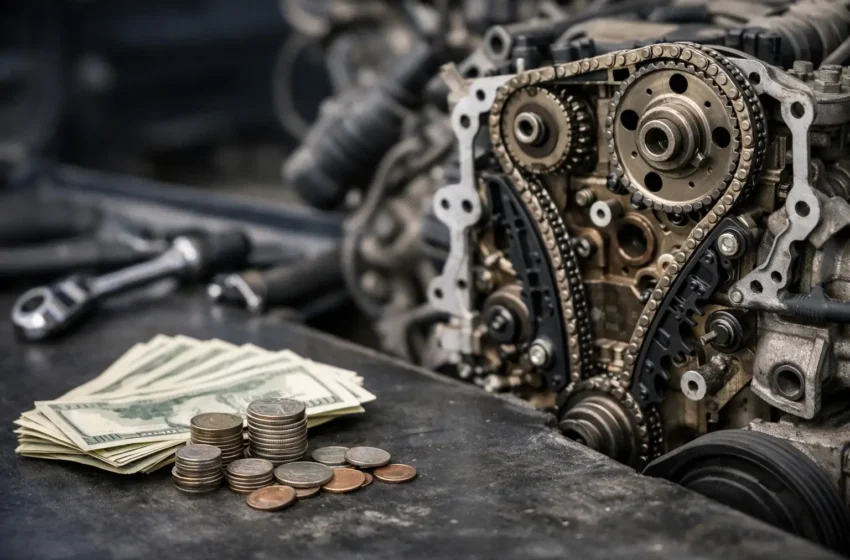
That rattling on a cold start is where the money conversation usually begins. Timing chain replacement cost is one of those repair topics that can swing from annoying to wallet-flattening fast, and the spread is huge because the chain itself is rarely the expensive part. Labor, engine layout, collateral parts, and how long the problem has been ignored are what turn this into a $900 repair on one car and a $3,500 ordeal on another.
If you own a higher-mileage vehicle, shop for used cars, or just heard a mechanic mention chain stretch, tensioner wear, or timing correlation codes, this is the repair to understand before you authorize anything. A timing chain is supposed to last longer than a timing belt, but “lifetime” does not mean forever, and it definitely does not mean free.
Contents
- What timing chain replacement cost really include?
- Average timing chain replacement cost by vehicle type
- Why does one timing chain job cost twice as much as another?
- Signs you may need a timing chain replacement
- Repair now or keep driving?
- Timing chain replacement cost versus car value
- Can you save money on the job?
- Should DIY owners attempt it?
- How to approach an estimate without getting burned
What timing chain replacement cost really include?
A lot of owners hear “timing chain” and assume they are paying for a single metal chain. In reality, most jobs include much more than that. On many engines, the chain runs with guides, tensioners, sprockets, and seals, and those supporting parts are often the first things to fail.
A proper estimate usually includes the chain kit, front cover gaskets or sealant, crankshaft seal, fresh oil and coolant, and a large labor bill. Some shops also recommend replacing variable valve timing components if wear or sludge has already affected the system. That adds cost, but it can save you from paying for overlapping labor twice.
The biggest reason timing chain replacement cost varies so much is access. On some inline-four engines, the front of the engine is relatively straightforward to reach. On certain V6, V8, and luxury applications, the job gets ugly quickly. Some engines place chains at the rear of the engine near the firewall, which can push labor into engine-out territory.
Average timing chain replacement cost by vehicle type
For most mainstream vehicles in the US, timing chain replacement costs usually range between $1,200 and $2,500 at an independent shop. Dealer pricing is often higher, and some premium or complex engines can easily clear $3,000.
Here is a realistic range for common categories.
| Vehicle Type | Typical Cost Range | Why It Varies |
|---|---|---|
| Economy 4-cylinder | $900 – $1,800 | Simpler layout, lower parts cost, less labor on some models |
| Mainstream V6 | $1,500 – $2,800 | More components, tighter access, longer labor time |
| Trucks and SUVs | $1,400 – $3,000 | Engine size, 4WD packaging, and model-specific complexity |
| Luxury and European models | $2,000 – $4,500+ | Expensive parts, specialized labor, rear-chain layouts on some engines |
| Performance engines | $2,500 – $5,000+ | Multiple chains, advanced timing systems, and high labor intensity |
That range is broad because the phrase “timing chain job” covers everything from a noisy tensioner on a basic sedan to a full multi-chain service on a twin-cam luxury SUV. If you are comparing estimates, make sure each shop is quoting the same scope of work.
Why does one timing chain job cost twice as much as another?
This is where owners get blindsided. The chain is often not the story. The labor is.
A front-engine, front-chain design with decent room to work can be manageable. But transverse engines packed into smaller engine bays can be far more time-consuming. Add all-wheel drive, turbo plumbing, or a rear-mounted chain setup, and labor hours climb in a hurry.
Several factors drive the final number:
- Engine design and chain location
- Number of chains, guides, and tensioners
- Need for additional parts like cam phasers or oil control valves
- Oil sludge or internal wear was discovered during teardown
- Independent shop versus dealership labor rate
- Whether the engine has already jumped timing or caused valve damage
That last point matters most. If the chain is merely noisy or stretched, the repair is expensive but usually contained. If it jumps timing on an interference engine, bent valves, or piston damage can turn a maintenance problem into an engine replacement decision.
Signs you may need a timing chain replacement
You do not always get a dramatic warning. Some cars rattle for months before anything serious happens. Others set a check engine light and still seem to run fine. That is why owners delay this repair, and that is often what makes it more expensive later.
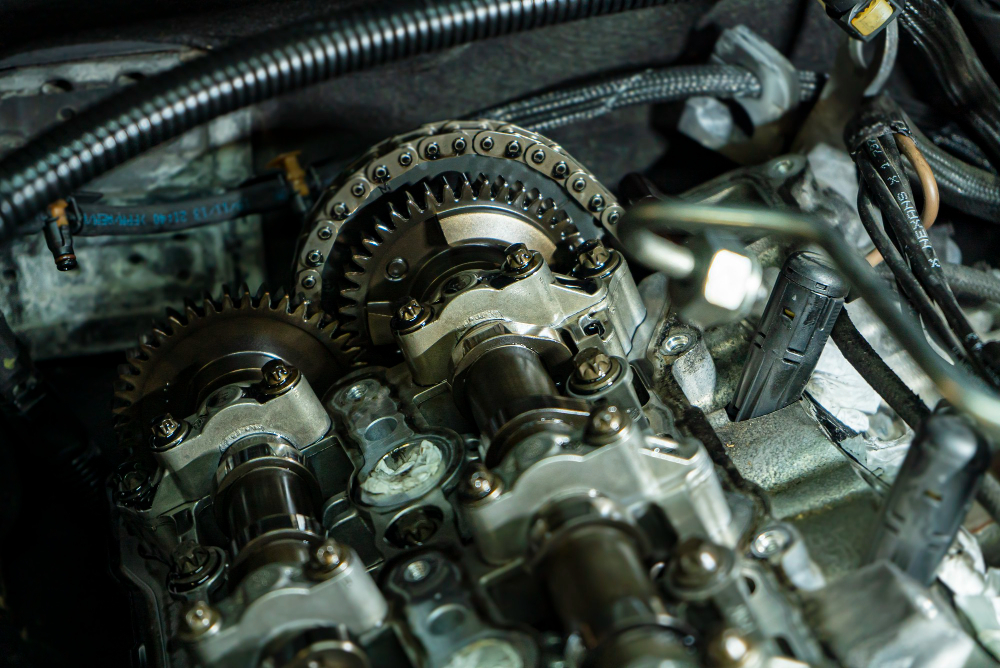
Common warning signs include:
- Rattling at startup, especially for a few seconds after a cold start
- Check engine light with camshaft or crankshaft correlation codes
- Rough idle or misfires
- Loss of power or hesitant acceleration
- Metal shavings in oil during inspection
- Hard starting or no-start in severe cases
If you are hearing startup rattle on a known problem engine, this is not the time for wishful thinking. Chains usually do not fix themselves, and tensioners definitely do not.
Repair now or keep driving?
Sometimes you can drive for a short period with early symptoms. Sometimes that is a terrible gamble. The difference depends on the engine, the severity of the wear, and whether the chain has already moved out of proper timing.
If the issue is a mild startup rattle and the shop confirms the engine is still in time, you may have a little room to plan the repair. If the car has timing-related fault codes, poor running, or obvious chain slap, every extra mile raises the stakes. A broken or jumped chain can turn a painful invoice into a catastrophic one.
This is the part where enthusiast logic and budget logic meet. If the vehicle is otherwise solid, a timing chain replacement can make financial sense. If it is a high-mileage car with transmission issues, rust, or multiple looming repairs, dropping $2,500 into it may not be the smart move.
Timing chain replacement cost versus car value
A chain repair is easier to justify on a truck, SUV, or desirable used car that still holds value. It is much harder to justify on an aging commuter with cosmetic damage and a list of overdue maintenance.
Here is a simple way to frame it.
| Scenario | Usually Makes Sense? | Reason |
|---|---|---|
| Reliable vehicle worth $10,000+ | Yes | Repair cost is often lower than replacement cost |
| High-mileage commuter worth $3,000-$5,000 | It depends | Worth it only if the rest of the car is healthy |
| Luxury vehicle with other major issues | Often no | One expensive repair can be followed by several more |
| Rare or enthusiast vehicle | Often yes | Ownership value is not purely financial |
That is the brutal truth. Timing chain replacement cost is not just about the invoice. It is about whether the repair resets the clock on a car you still want to own.
Can you save money on the job?
Yes, but there is a right way and a risky way. The right way is to compare estimates from reputable independent shops with solid experience on your specific engine. Some shops quote lower because they know the platform well and already understand its failure points.
The risky way is cutting corners on parts or replacing only the chain while reusing worn guides and tensioners. That can backfire fast. If a shop is not replacing the related wear items, ask why. A cheap timing chain job can become an expensive repeat job.
You may also save money by addressing the issue early. Once the chain has skipped timing or damaged other components, the repair stops being routine. It becomes detective work, plus extra parts, plus more labor.
Should DIY owners attempt it?
Only if you are genuinely advanced. This is not a beginner weekend project just because you own a torque wrench and watch repair videos. On many engines, correct timing requires specialty tools, precise alignment procedures, and enough mechanical discipline to avoid being one tooth off.
If you get it wrong, the engine may run badly, not start, or suffer internal damage. For a confident DIY owner with the right tools, the parts bill can be far lower than shop pricing. For everyone else, this is usually a professional repair.
How to approach an estimate without getting burned
Ask what parts are being replaced, whether OEM or aftermarket components are being used, and whether the quote includes seals, fluids, and related hardware. Also, ask if the engine has shown any evidence of jumped timing, metal contamination, or variable valve timing damage.
A good estimate should be specific. If it sounds vague, that is a red flag. You want to know whether the quoted timing chain replacement cost covers a complete repair or just the minimum needed to get the car out the door.
If you are shopping for a used car with known chain issues, this repair should absolutely factor into your offer. A cheap used car can become expensive the moment a startup rattle enters the picture.
Timing chain problems are frustrating because they sit in that gray zone between maintenance and major failure. But if you catch the issue early, get a clear estimate, and judge the repair against the rest of the car’s condition, you can make a smart call instead of an emotional one.