
How to Inspect Used Cars Like a Pro
That shiny used car can look like a bargain right up until the first repair bill lands. If you want to know how to inspect used cars the right way, the goal is simple: spot expensive problems before they become your problems.
A good inspection is not about acting like a master technician in a stranger’s driveway. It is about slowing down, checking the car in the right order, and knowing which flaws are cosmetic, which are negotiable, and which are your cue to walk away. For most buyers, that one habit matters more than horsepower, trim level, or a good story from the seller.
Contents
- How to inspect used cars before you start the engine
- Check the cabin like an owner, not just a shopper
- Under the hood: what matters most
- How to inspect used cars on a test drive
- Paperwork can save you from the worst mistake
- What is cosmetic, what is expensive, and what is a walk-away issue?
- Never skip a pre-purchase inspection
How to inspect used cars before you start the engine
Start with the setting, because it tells you a lot. Inspect the car in daylight on dry pavement if possible. Rain hides scratches, poor light hides dents, and a warm engine can hide cold-start issues. If the seller already has the car running when you arrive, ask why.
Walk around the vehicle slowly. You are looking for consistency. Body panel gaps should look even, paint color should match from panel to panel, and the car should sit level. One fender that looks newer than the rest does not automatically mean disaster, but it does mean you should look harder for past accident repair.
Check the glass and lights next. Cracked windshields, fogged headlights, and broken lamp housings are not always deal breakers, but they are costs you should factor in. On many newer cars, replacing headlight assemblies is far more expensive than buyers expect.
Then look at the tires. Uneven wear is one of the best quick clues in a used-car inspection. A car with more wear on one edge of the tire may need an alignment, suspension work, or both. If all four tires are mismatched, cheap brands, that can hint at an owner who cut corners elsewhere, too.
| What You Check | What Good Looks Like | What It May Mean If It Looks Bad |
|---|---|---|
| Paint and panel gaps | Even color, consistent spacing | Past collision repair or poor bodywork |
| Tires | Even tread wear, matching set | Alignment, suspension issues, and neglected maintenance |
| Ride height | The car sits level | Worn springs, suspension damage, and overloading history |
| Lights and glass | No cracks, no heavy haze | Repair costs, water leaks, and accident clues |
Check the cabin like an owner, not just a shopper
The interior tells you how the car was treated. Heavy wear on the driver’s seat, steering wheel, and pedals should be expected given the mileage. If a 70,000-mile car looks like it survived 200,000 hard miles, be skeptical. Either the odometer reading is not telling the full story, or the owner was especially rough on it.
Turn everything on. Test the windows, locks, mirrors, infotainment screen, climate control, backup camera, seat heaters, and every button you can reasonably reach. Modern used cars can be full of small electrical faults that are annoying rather than catastrophic, but annoying still costs money.

Pay attention to smell. A musty odor can point to water intrusion. A strong air freshener can cover smoke, mildew, or both. Damp carpets are a major red flag because water leaks can come from clogged drains, bad seals, or previous flood damage.
Under the hood: what matters most
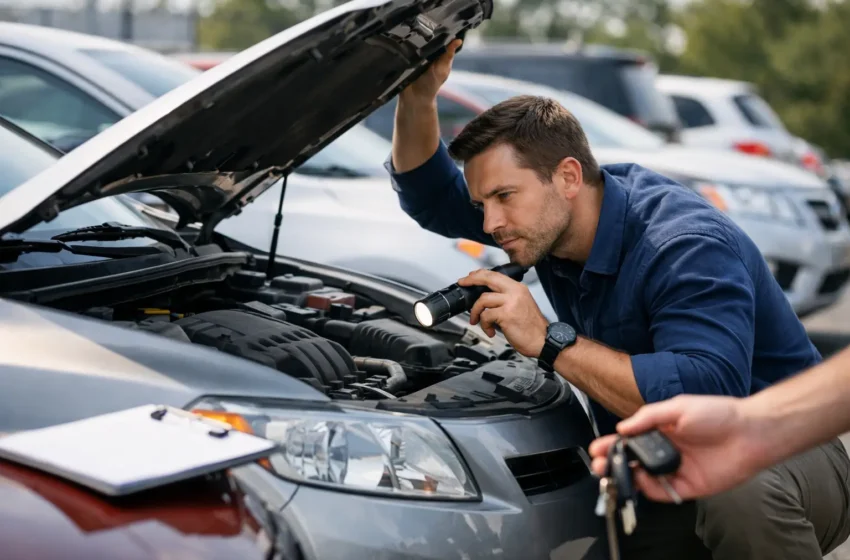
You do not need to tear the engine apart. You do need to look for obvious neglect. Open the hood and check for fluid leaks, cracked hoses, loose wiring, and signs that one area has been freshly cleaned while everything else is dirty. A spotless engine bay in one corner can sometimes mean someone is hiding a leak.
Pull the oil dipstick if the car has one. The oil should not look glittery or milky. If transmission fluid is accessible, it should not smell burned. Coolant should look like coolant, not muddy soup. Also, check the battery age if it is marked. A weak battery is minor compared with engine trouble, but it is still leverage in negotiation.
Here is where trade-offs matter. A small seep on an old, high-mileage truck may not be shocking if the price reflects it. The same leak on a newer family crossover being sold at top market money is another story.
Red flags that deserve extra caution
- Thick smoke from the exhaust after startup or during acceleration
- Loud ticking, knocking, or grinding noises from the engine bay
- Fresh fluid drips under the car after idling
- Warning lights that stay on or seem intentionally cleared
- Evidence of overheating, including low coolant or stained overflow tanks
How to inspect used cars on a test drive
The test drive is where a lot of bad cars expose themselves. Start with a cold start if possible. Listen for timing chain rattle, lifter noise, rough idle, or excessive smoke. Some engines are noisy by design, but harsh mechanical sounds should never be brushed off just because the seller says, “They all do that.”
Drive on city streets first, then at highway speed. The car should accelerate smoothly, shift without flaring or slamming, and track straight without constant steering correction. Braking should feel stable, not shaky. If the steering wheel vibrates at speed, you could be looking at anything from cheap tire issues to worn suspension parts.
Find a rough patch of road if you can. Clunks over bumps often reveal tired ball joints, sway bar links, shocks, or struts. In an SUV or truck, driveline vibration under acceleration can point to more expensive issues. In a front-wheel-drive commuter car, clicking on tight turns can mean worn CV joints.
| Test Drive Symptom | Possible Cause | How Serious It Can Be |
|---|---|---|
| Pulls to one side | Alignment, tire issue, brake drag | Moderate to serious |
| Hard or delayed shifts | Transmission wear or software issue | Potentially expensive |
| Vibration at highway speed | Wheel balance, bent wheel, suspension wear | Mild to serious |
| Clunking over bumps | Worn suspension components | Usually repairable, sometimes costly |
Paperwork can save you from the worst mistake
A clean-looking car with bad paperwork is still a bad bet. Check the title status, VIN, service records, and whether the name on the title matches the seller. If the seller is vague about ownership, slow down.
Service history matters because it shows patterns. Regular oil changes, brake work, and cooling system service are reassuring. Large gaps in records are not an automatic no, especially on older cars, but they shift more risk to you.
A vehicle history report helps, but do not treat it like the gospel. Not every accident, flood event, or maintenance visit gets reported. The smartest buyers use paperwork as one piece of the puzzle, not the whole puzzle.
What is cosmetic, what is expensive, and what is a walk-away issue?
This is where emotion usually gets buyers in trouble. Scratches, worn seat bolsters, and aged trim are often manageable. Bald tires, worn brakes, suspension problems, and cooling system faults are real-money issues. Structural rust, flood damage, and serious transmission or engine symptoms are when you should be ready to leave.
It also depends on the car. A cheap project car for an enthusiast has different standards than a used minivan you depend on every morning. Car Geek Talk readers usually know this already, but it is worth saying out loud: the right amount of risk depends on the mission.
If you are buying a basic commuter, your inspection should be ruthless. If you are buying an older sports car with known quirks, your inspection should be informed. Those are not the same thing.

Never skip a pre-purchase inspection
If the car passes your basic checks, spend the money on a professional pre-purchase inspection. This is the best move in the whole process. A good independent shop can spot leaks, prior repairs, worn suspension parts, and scan-tool trouble codes that a driveway check will miss.
If a seller refuses to allow an inspection, assume there is a reason. There are too many used cars on the market to gamble on the one seller who wants you to buy blind.
A smart used-car inspection checklist
If you want the short version to keep on your phone at the viewing, I put together a free used car inspection checklist that covers exactly these essentials.
- Inspect the body, paint, glass, and lights in daylight
- Check tire wear, tread depth, and whether all four tires match
- Test every interior feature and smell for water or smoke damage
- Look under the hood for leaks, dirty fluids, and neglect
- Take a full test drive at low and high speeds
- Review title, VIN, and service records
- Get a pre-purchase inspection before money changes hands
A used car does not need to be perfect to be worth buying. It does need to be honest. The best inspection is not the one that finds nothing – it is the one that tells you exactly what kind of car you are about to live with.