
Why Is Coolant Disappearing? The Brutal Truth
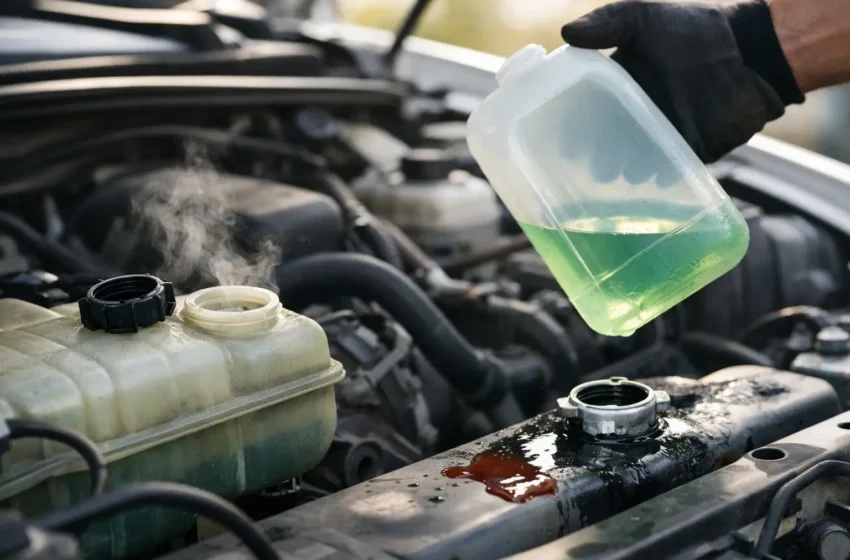
You top off the reservoir, drive for a few days, and the level drops again. That is usually when people start asking, “Why is coolant disappearing if there is no obvious puddle under the car?” The short answer is simple: coolant only goes a few places. It leaks externally, leaks internally, boils off because the system cannot hold pressure, or gets pushed out by another fault.
The expensive part is not the disappearing coolant itself. It is what happens if you keep driving while pretending it is normal. Modern engines run hot, use tighter tolerances, and do not tolerate repeated overheating well. A small coolant loss can mean a cheap hose clamp, or it can be the early warning sign of a head gasket problem that turns a manageable repair into a wallet-busting one.
Contents
- Why is coolant disappearing with no visible leak?
- The most common reasons coolant goes missing
- What the symptoms usually point to
- How to figure out why coolant is disappearing
- Common causes compared by cost and risk
- Can coolant ever disappear normally?
- Should you keep driving if the coolant is disappearing?
- The brutal truth about disappearing coolant
Why is coolant disappearing with no visible leak?
This is the most frustrating version of the problem because the cooling system can lose coolant in ways that do not leave a neat puddle on the driveway. Coolant can seep from a water pump weep hole and evaporate on a hot engine. It can leak from the radiator end tank only when the system is fully hot and pressurized. It can also leak into the engine, where it gets burned or mixed with oil.
A lot depends on when the coolant disappears. If it drops slowly over months, you may be looking at a minor seep, a weak radiator cap, or normal evaporation from an overflow event. If it drops quickly over days, or you need to top it off repeatedly, that is not normal wear. That is a fault.
The most common reasons coolant goes missing
Some causes are minor, some are not, and the symptoms often overlap. That is why guessing gets expensive.
External leaks
External leaks remain the most common cause. Radiators crack, plastic end tanks split, hose connections loosen, thermostat housings warp, and heater hoses age out. On many vehicles, the leak is small enough that coolant hits a hot component and evaporates before it ever reaches the ground.
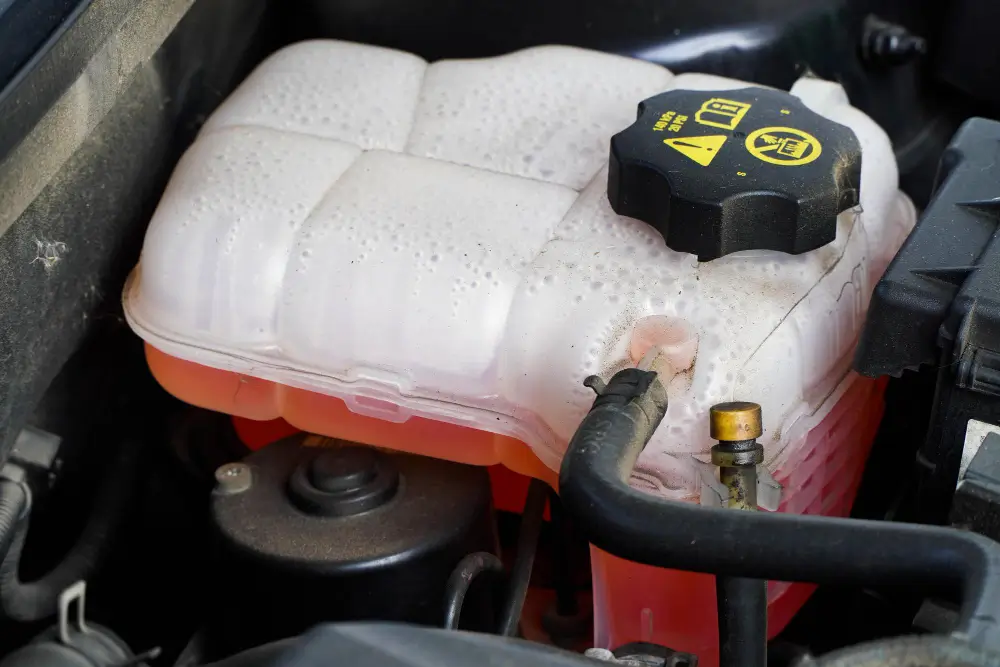
Check around the radiator, upper and lower hoses, heater hose fittings, the thermostat housing, the water pump area, and the coolant reservoir itself. Dried coolant often leaves a white, pink, orange, or green crust depending on the coolant type.
A failing radiator cap
The radiator cap looks cheap because it is cheap, but it matters. The cooling system relies on pressure to raise the coolant’s boiling point. If the cap cannot hold pressure, coolant may boil earlier than it should and vent out into the overflow or out of the system.
This is one of those low-cost parts that can create high-drama symptoms. If the cap is weak, you may see coolant loss without a dramatic leak.
Water pump seepage
Many water pumps fail gradually. Before the bearing gets noisy or the pump starts pouring coolant, a small amount can leak from the weep hole. Because the pump sits near a hot engine and spinning belt system, the coolant may disappear without much evidence unless you inspect closely.
Heater core leaks
A leaking heater core does not always drip outside. Sometimes it leaks inside the cabin. If your windows fog up with a sweet smell, the carpet feels damp, or the heater’s performance gets weird, the heater core should be on the suspect list.
Internal engine leaks
This is the one owner’s fear, and for good reason. A blown head gasket, cracked cylinder head, or cracked engine block can allow coolant to enter the combustion chamber or oil passages. That can cause white exhaust smoke, rough starts, overheating, misfires, contaminated oil, or unexplained pressure in the cooling system.
Not every internal leak creates the classic milkshake-looking oil cap. Sometimes the engine burns small amounts of coolant for a while before the signs become obvious.
Overflow from overheating
Sometimes, coolant is not leaking out in the usual sense. It is being pushed out because the engine is overheating, the fan is not working properly, there is air trapped in the system, or combustion gases are entering the cooling system. In that case, the disappearing coolant is more of a symptom than the root problem.
What the symptoms usually point to
| Symptom | Likely Cause | How Serious? |
|---|---|---|
| Coolant level drops slowly, no puddle | Small hose leak, radiator seep, weak cap, water pump seep | Moderate – diagnose soon |
| Sweet smell from the engine bay | External coolant leak evaporating on hot components | Moderate |
| Sweet smell inside the cabin, foggy windows | Heater core leak | Moderate to high |
| White exhaust smoke after warm-up | Coolant entering the combustion chamber | High |
| Overheating plus bubbling in the reservoir | Air in the system, bad cap, head gasket, and fan issue | High |
| Oily coolant or milky oil | Internal engine leak | Very high |
How to figure out why coolant is disappearing
Start with the basics before jumping to worst-case conclusions. A lot of owners replace parts based on internet fear when the real issue is a hose, cap, or clamp.
First, inspect the system cold. Look for crusty residue, wet spots, staining around hose ends, and leaks at the radiator seams. Check the water pump area and the underside of the thermostat housing. Then inspect the coolant reservoir for cracks, especially around the seam and hose nipple.
Next, pay attention to patterns. Does the coolant drop only after long highway drives? That can point to a pressure-related leak. Does it disappear more when the heat is on? A heater core becomes more likely. Does the car overheat at idle but not at speed? That leans more toward cooling fan issues than a simple leak.
If nothing is visible, a pressure test is the smart move. It pressurizes the system with the engine off, which often reveals leaks that hide during normal operation. A combustion leak test can also help rule in or rule out head gasket trouble if the system keeps building pressure or the car overheats for no obvious reason.
These clues deserve immediate attention:
- Repeated overheating
- White smoke that does not go away after startup
- Bubbling in the reservoir
- Coolant smell inside the cabin
- Oil that looks milky or foamy
- A cooling system hose that gets rock hard quickly after startup
Common causes compared by cost and risk
| Cause | Typical Repair Cost Range | Risk if Ignored |
|---|---|---|
| Radiator cap | $15-$40 | Boiling, coolant loss, overheating |
| Coolant hose or clamp | $50-$250 | Sudden leak, overheating |
| Radiator | $300-$1,000 | Rapid coolant loss, overheating |
| Water pump | $400-$1,200 | Leak plus possible circulation failure |
| Heater core | $700-$1,800 | Cabin leak, poor heat, coolant loss |
| Head gasket | $1,500-$4,000+ | Major engine damage |
Those numbers vary a lot by vehicle. A transverse V6 with a buried water pump can turn a routine repair into a labor-heavy job. A simple older truck may be much cheaper to sort out. That is why the same symptom can have very different ownership consequences depending on what you drive.
Can coolant ever disappear normally?
A tiny change in reservoir level across seasons is not unusual. Coolant expands when hot and contracts when cold, and some systems are more sensitive to level changes than others. But if you are adding coolant more than occasionally, that is not normal.
This is where owners get tripped up. They assume a car that still drives fine cannot have a serious problem. In reality, many cooling system failures start quietly. The engine may run normally right up until the day it overheats hard.
Should you keep driving if the coolant is disappearing?
If the level is dropping slightly and the car never runs hot, you may be able to drive it short-term while actively diagnosing it. That is not the same as ignoring it. Keep the coolant at the correct level, monitor temperature closely, and do not push the car.
If the vehicle is overheating, blowing white smoke, misfiring on startup, or losing coolant rapidly, stop driving it. At that point, the risk is no longer just the repair cost. You are gambling with the engine itself.
The brutal truth about disappearing coolant
When coolant goes missing, the system is telling you something before the repair bill gets larger. The smart move is not to keep topping it off and hoping the problem stays small. It is to find out whether you have a minor seep, a pressure problem, or the start of a major internal failure.
That approach fits how enthusiasts and careful owners think anyway. Diagnose early, spend once, and avoid turning a cooling system problem into an engine replacement.
Helpful independent resources: RepairPal · NHTSA · your vehicle's owner's manual