

Hybrid vs Gas Maintenance Costs: The Brutal Truth
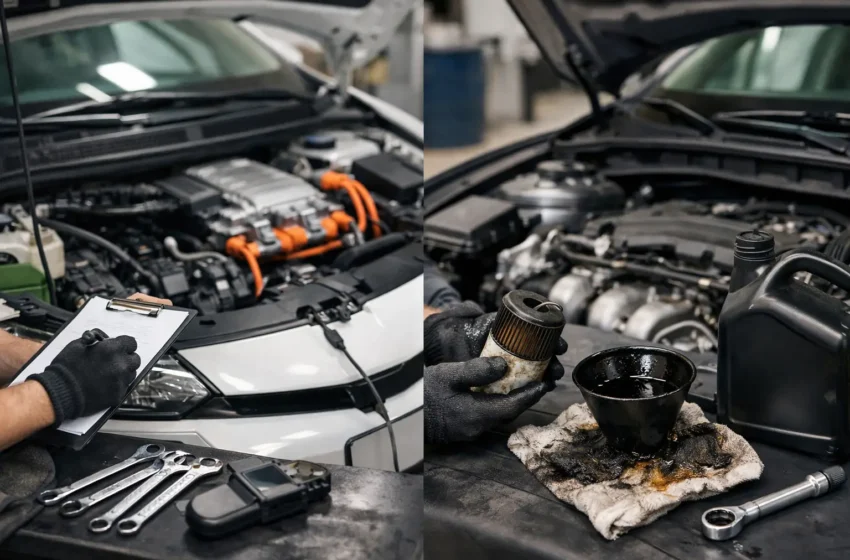
If you are comparing hybrid vs gas maintenance costs, the answer usually gets distorted by two extremes: people who act like hybrids are ticking time bombs, and people who pretend gas cars are automatically cheaper to keep alive. Real ownership sits in the middle. For most US drivers, hybrids often cost less to maintain over time, but the gap depends heavily on mileage, vehicle age, battery design, and how expensive the gas-only alternative is to repair.
That matters because maintenance cost is not the same thing as total ownership cost, and it is definitely not the same thing as repair risk. A hybrid can save money on routine wear items and fuel while still carrying one expensive outlier risk. A gas car can look simple on paper while quietly eating through brakes, fluids, and engine-related repairs as miles pile on.
Contents
- Hybrid vs Gas Maintenance Costs: Where the Real Difference Shows Up
- Routine Maintenance Usually Favors Hybrids
- The Battery Question Changes the Conversation
- Short-Term Ownership vs Long-Term Ownership
- Driving Style Matters More Than Most Buyers Think
- When Gas Cars Still Make More Sense
- So Which One Is Usually Cheaper to Maintain?
Hybrid vs Gas Maintenance Costs: Where the Real Difference Shows Up
The biggest reason hybrids tend to do well on maintenance is simple mechanical logic. Their gasoline engines usually work less aggressively, the electric motor helps during acceleration, and regenerative braking reduces brake wear. In stop-and-go driving, that matters a lot. A conventional gas car spends more time idling, using friction brakes, and loading the engine at low-speed conditions, where wear and fuel consumption both add up.
That does not mean hybrids are maintenance-free. They still need tires, cabin filters, coolant, suspension parts, and eventually brake service. Most also still need engine oil changes, though sometimes at longer intervals depending on the model. The difference is that a well-designed hybrid often delays some common wear items rather than eliminating them.
Here is the practical side-by-side view.
| Maintenance Area | Hybrid | Gas Vehicle |
|---|---|---|
| Oil changes | Usually required, but the engine may see less stress | Required regularly, full engine workload |
| Brake pads and rotors | Often last longer due to regenerative braking | Typically wear faster, especially in city driving |
| Transmission service | Often, simpler eCVT-style systems are on many hybrids | Can vary widely, from durable to expensive failures |
| Battery-related risk | Higher if the traction battery fails out of warranty | Lower, but still has a 12-volt battery replacement |
| Engine-related repairs | Often somewhat reduced due to lower load | More exposure to full-time engine wear |
Routine Maintenance Usually Favors Hybrids
If you keep a car for five to eight years and follow the factory schedule, hybrids are often surprisingly boring in a good way. Brake jobs can be less frequent. Engine components may see less abuse. Some hybrid drivetrains, especially Toyota-style systems, have earned a reputation for low drama because they avoid some of the complexity found in traditional automatic transmissions.
For commuters and families, this is where hybrids make a strong case. The owner who racks up miles in traffic usually benefits most because regenerative braking and partial electric operation shine in exactly those conditions.

The most common routine-cost advantages for hybrids are:
- less brake wear in city driving
- reduced engine strain during low-speed use
- fewer transmission-related headaches on some hybrid designs
- lower fuel spending, which is not maintenance but still matters to the monthly budget
Gas vehicles can still be the cheaper maintenance play if you choose a simple, reliable model with a naturally aspirated engine and proven transmission. A basic compact sedan with low parts costs may narrow the gap or even beat a hybrid on service expenses in the short term.
The Battery Question Changes the Conversation
This is where people either panic too much or dismiss the issue entirely. Hybrid battery replacement is real, and when it happens out of warranty, it can be expensive. But it is not the guaranteed annual disaster some buyers imagine.
Modern hybrid battery packs often last well beyond 100,000 miles, and many go much farther. Heat, age, and neglect can shorten lifespan, but plenty of hybrids spend years in normal service without needing a traction battery. When failure does happen, the cost varies widely by make, model, whether you use a new or remanufactured pack, and labor rates in your area.
That single repair risk is the biggest reason the hybrid vs gas maintenance costs debate stays complicated. A gas car may have more small and medium repairs over time. A hybrid may have fewer routine issues, but one bigger ticket item if the battery ages out.
| Potential Major Repair | Hybrid Risk Profile | Gas Vehicle Risk Profile |
|---|---|---|
| Traction battery replacement | Possible high-cost event, usually later in life | Not applicable |
| Automatic transmission failure | Often less common on proven hybrid systems | Can be a major expense on some models |
| Starter or alternator issues | May be absent or different on some hybrids | Common aging-vehicle repair items |
| Engine wear-related repairs | Often reduced, not eliminated | More dependent on full-time engine operation |
Short-Term Ownership vs Long-Term Ownership
If you buy new or nearly new and sell before 100,000 miles, hybrids often look especially strong. You get the benefit of lower brake wear and reduced fuel costs while avoiding most late-life battery anxiety. That is one reason hybrids have become such smart commuter appliances, even for buyers who are not especially interested in green marketing.
If you buy used at 120,000 miles and keep the car until something expensive breaks, the math gets more situational. A well-kept hybrid from a brand with a strong track record may still be a great buy. But an aging hybrid with unknown service history can shift from bargain to gamble faster than a simple gas sedan.

Used buyers need to think less about the hybrid badge and more about the specific vehicle. A Toyota Prius with documented maintenance is a different proposition from a neglected hybrid crossover with cooling system issues and a weak battery pack. The same is true for gas cars. A reliable gas Corolla is not the same ownership story as a turbocharged SUV with a fragile transmission.
Driving Style Matters More Than Most Buyers Think
City drivers usually get the best maintenance value from hybrids. Frequent braking means more regenerative recovery and less wear on pads and rotors. Stop-and-go conditions also favor electric assistance, which reduces strain on the engine.
Highway-heavy drivers may see a smaller maintenance difference. On long, steady trips, the hybrid system still helps, but not as dramatically. If your commute is mostly interstate driving, the fuel savings and brake savings may be less dramatic, which makes the maintenance comparison tighter.
Cold climates and very hot climates also deserve attention. Extreme temperatures can affect battery performance and longevity. That does not automatically make hybrids a bad idea, but it does mean buyers in harsh environments should research model-specific reliability rather than assuming every hybrid ages the same way.
When Gas Cars Still Make More Sense
There are cases where a gas vehicle remains the smarter ownership choice. If you are shopping at the lower end of the used market, simplicity still has real value. A non-hybrid compact with a proven naturally aspirated engine may offer cheaper repair access, more independent shop familiarity, and fewer fears about high-voltage components.
Gas cars also make sense for buyers who do their own repairs and want maximum mechanical familiarity. Plenty of DIY owners are comfortable replacing plugs, coils, belts, and sensors, but not everyone wants to work around hybrid-specific systems. That comfort level has a real financial value.
The strongest situations for gas cars tend to be:
- low-budget used purchases with limited repair reserves
- buyers keeping the car for a short time at low annual mileage
- drivers prioritizing mechanical simplicity over fuel savings
- specific non-hybrid models with excellent reliability histories
So Which One Is Usually Cheaper to Maintain?
The brutal truth is this: hybrids are often cheaper to maintain in routine day-to-day ownership, but they carry a battery-related wildcard that gas cars do not. For many drivers, especially commuters and families piling on city miles, the lower brake wear and lighter engine workload make hybrids the better maintenance bet. For budget used-car buyers shopping for older, high-mileage vehicles, a simple gas model can still be the safer financial move.
That is why the smartest comparison is never hybrid versus gas in the abstract. It is one specific hybrid versus one specific gas vehicle, at a certain mileage, with a certain ownership plan. Car Geek Talk readers know this already – the badge matters less than the engineering, service history, and how you actually use the car.
If you are choosing between two vehicles right now, focus on three things before anything else: the model’s reliability record, the expected mileage you will put on it, and whether you are buying before or after the expensive aging phase starts. Get those right, and the maintenance-cost answer usually becomes a lot less mysterious.