
Used Car Price Trends: 5 Hard Truths for Buyers
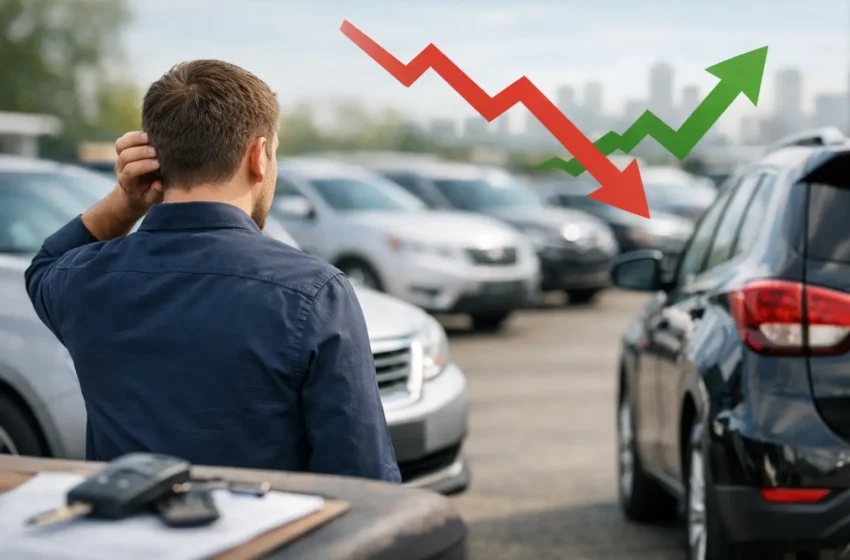
A buddy of mine went shopping for a three-year-old Toyota RAV4 last spring and called me halfway through, genuinely confused. The listing was nearly new-car money. He thought he’d misread it. He hadn’t. That kind of sticker shock is exactly why used car price trends still matter to anyone shopping, trading in, or trying to time a buy. The market has cooled off its pandemic-era insanity. But it hasn’t snapped back to the bargain-bin normal a lot of buyers are still expecting.
Waiting for every used car to magically get cheap again? That’s a rough bet. The smarter play is knowing which corners of the market are actually correcting, which ones are stubbornly expensive, and why two cars with nearly identical age and mileage can drift in completely opposite directions.
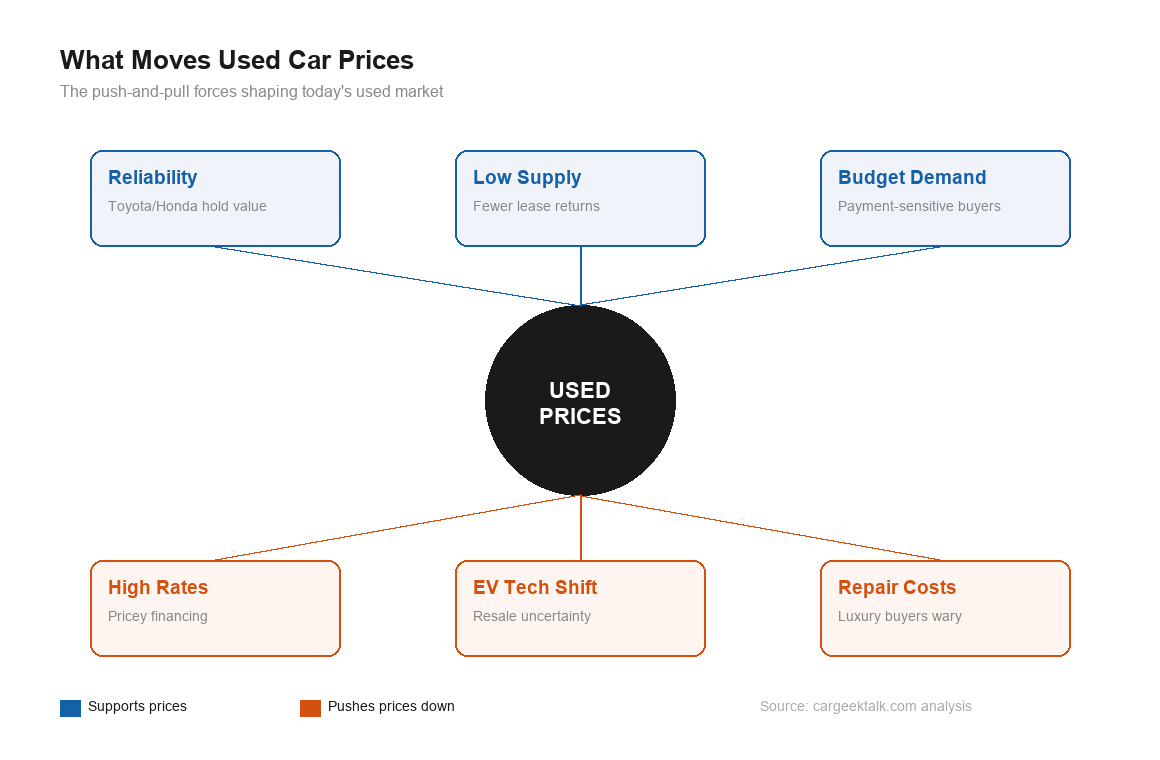
The main forces pulling used prices in different directions, segment by segment.
Contents
- Why used car price trends are still so uneven
- What’s actually pushing prices up or down
- Which segments are cooling the fastest
- Used car price trends by age and mileage
- The brutal truth: price is only half the story
- How to shop smarter in this market
- Should you buy now or wait?
- Where the market goes from here
- Frequently asked questions
Why used car price trends are still so uneven
The headline is simple. Prices are down from the peak, but the market’s still bent out of shape. Those supply shortages from 2020 to 2022 didn’t just hammer new cars in the moment. They gutted the number of lease returns and trade-ins that would normally feed the used pipeline two and three years later. So today’s used inventory is still shaped by factory problems from years ago. Sound familiar? It should — it’s the same domino effect that made new-car waitlists a thing.
Then interest rates changed how people shop. When financing gets expensive, buyers stop thinking about the total price and start thinking about the monthly payment. That pushes more shoppers toward cheaper used cars, which keeps demand weirdly strong at the bottom of the market even when the broader picture softens.
Which is why the “average” used vehicle can look more affordable on paper while the budget-friendly stuff still feels overpriced when you’re actually standing on the lot. The market doesn’t move as one clean line. It never really does.
What’s actually pushing prices up or down
A handful of forces matter way more than the rest, and they don’t hit every segment the same way.
Reliability still commands a premium. Honda, Toyota, and a few Mazda models resist price drops because buyers genuinely trust them to go the distance. Meanwhile some domestic sedans, older luxury cars, and anything with a shaky reliability record can fall faster — thinner demand, plus that nagging repair anxiety in the back of every buyer’s head.
Mileage works differently now too. In a normal market, high miles meant a predictable value hit, full stop. Today? A clean, one-owner car with 110,000 miles and a stack of service records can still pull strong money if the model has a reputation for lasting. Plenty of buyers are choosing documented history over a lower odometer reading on a sketchier car. Smart move, honestly. I’d take the paper trail every time.
Fuel prices and drivetrain preferences swing things as well. When gas climbs, efficient hybrids and compacts get hot. When shoppers start worrying about long-term EV depreciation or battery replacement costs, used EVs can drop faster than comparable gas models. That’s an opportunity — but only if you actually understand charging, range, warranty coverage, and battery health before you sign anything.
Which segments are cooling the fastest
The biggest corrections show up where supply has recovered or where demand got inflated past all reason.
Full-size trucks and some big SUVs soften when payments get painful. Expensive to finance. Expensive to fuel. Expensive to insure. That doesn’t mean they’re suddenly cheap, but the market has way less patience for a wildly optimistic asking price than it did in 2022.
Used EVs are the other big story. Several models have seen sharper depreciation thanks to shifting tax credit rules, fast-moving battery tech, and buyers worrying about what their car will be worth in five years. For the right shopper, a cheap used EV is a steal. For the wrong one, it’s a costly mismatch waiting to happen.
Near-luxury and luxury sedans tend to correct faster than mainstream compact crossovers. Everyone loves the leather and the badge — right up until someone mentions an out-of-warranty repair quote. Then they back away slowly.
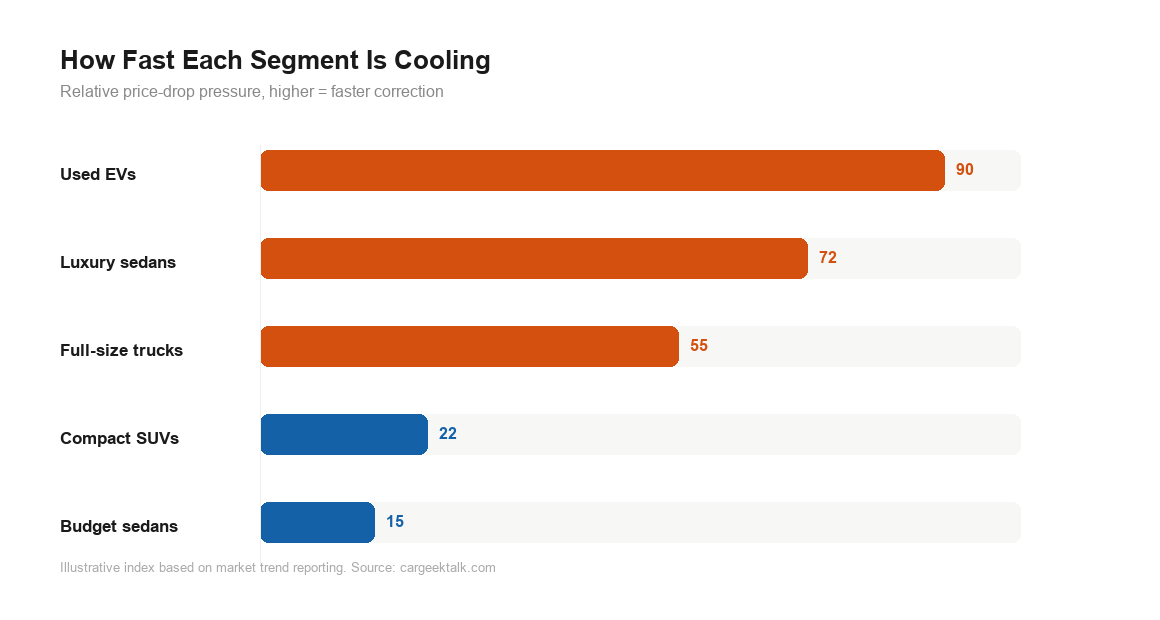
Roughly how fast each segment is correcting right now — higher bars mean faster price drops.
| Segment | Current Price Trend | Why It Matters |
|---|---|---|
| Compact SUVs | Holding value well | High demand, family-friendly size, strong reliability rep |
| Budget sedans | Still firm | Payment-sensitive buyers keep demand elevated |
| Full-size trucks | Mixed to softening | Higher financing and fuel costs squeeze demand |
| Used EVs | Often falling faster | Rapid tech change and resale uncertainty create volatility |
| Luxury sedans | Usually softening | Repair costs and weaker demand hurt resale |
Used car price trends by age and mileage
The old sweet spot has shifted. For years the advice was gospel: buy something two to four years old, let the first owner eat the depreciation. Still useful. Not automatic anymore.
A lot of lightly used cars are priced way too close to new. If a one- or two-year-old example costs only a couple grand less than a fresh one, the math can tip toward buying new — especially when the new car comes with a better interest rate, a full factory warranty, and zero hidden wear. According to the EPA’s fuel economy guides, the running-cost gap between a near-new and a brand-new version of the same model is often tiny, which makes the warranty difference matter even more.
And older cars aren’t guaranteed bargains either. Vehicles in that 8-to-12-year range with 100,000-plus miles often cost more than buyers expect, because they’re the only realistic option for shoppers locked into a strict budget. That demand props up the floor. Hard.
| Vehicle Age | Typical Trend | Best Buyer Fit |
|---|---|---|
| 1–2 years old | Often overpriced vs. new | Buyers who find a clear discount and want low miles |
| 3–5 years old | Competitive, but model-dependent | Shoppers balancing value, warranty, and modern features |
| 6–9 years old | Better value in selective models | Buyers chasing reliability and lower insurance costs |
| 10+ years old | Demand at the low end keeps prices sticky | Strict-budget buyers willing to accept maintenance risk |
If you’re not sure how to separate a genuinely solid older car from a money pit, our guide on how to inspect used cars walks through exactly what to check before you hand over a deposit.
The brutal truth: price is only half the story
This is where plenty of shoppers get burned. They chase the cheapest listing instead of the best ownership outcome. Big difference.
A used BMW, Audi, or Mercedes might look affordable parked next to a same-price Camry or Accord. But that lower resale value reflects buyer caution for a reason. Repair complexity, parts costs, and skipped service work can erase your upfront savings in a single visit to the service bay. I’ve watched it happen — a friend’s “great deal” 5 Series ate $3,400 in suspension and electrical work inside the first year.
Same logic applies to trucks with monster towing ratings that never see a trailer, or aging EVs sold cheap with zero battery-health documentation. If used car price trends are telling you anything, it’s that the market rewards cars people trust to own, not cars people just want to test-drive once.
How to shop smarter in this market
The best move right now is comparing total cost, not just the sticker. Monthly payment matters — but so do insurance, fuel, expected repairs, tire wear, and how much value the thing’s going to bleed over the next two or three years. The folks at the IIHS have good data on how vehicle size and type affect both safety and long-term costs, which is worth a look before you commit to a segment.
My take: a slightly pricier car with a better interest rate often beats a “cheaper” one with a brutal loan. Run the actual numbers, not the gut feeling.
A few things worth doing every single time:
- Compare the used price against a similar new vehicle — not just other used listings.
- Days on market. Overpriced cars sit, and a long listing is leverage.
- Did you pull the service records and check tire tread before haggling over a few hundred bucks?
- Stay flexible on color and trim. Never flexible on maintenance history or title status.
- Hybrids, sedans, and the less-fashionable body styles often hide better value than the obvious crossover everyone’s fighting over.
If financing’s part of your plan, rate shopping matters nearly as much as car shopping. Our breakdown of how to buy a reliable used car without regret goes deeper on stacking the deck in your favor before you ever walk into a dealership.
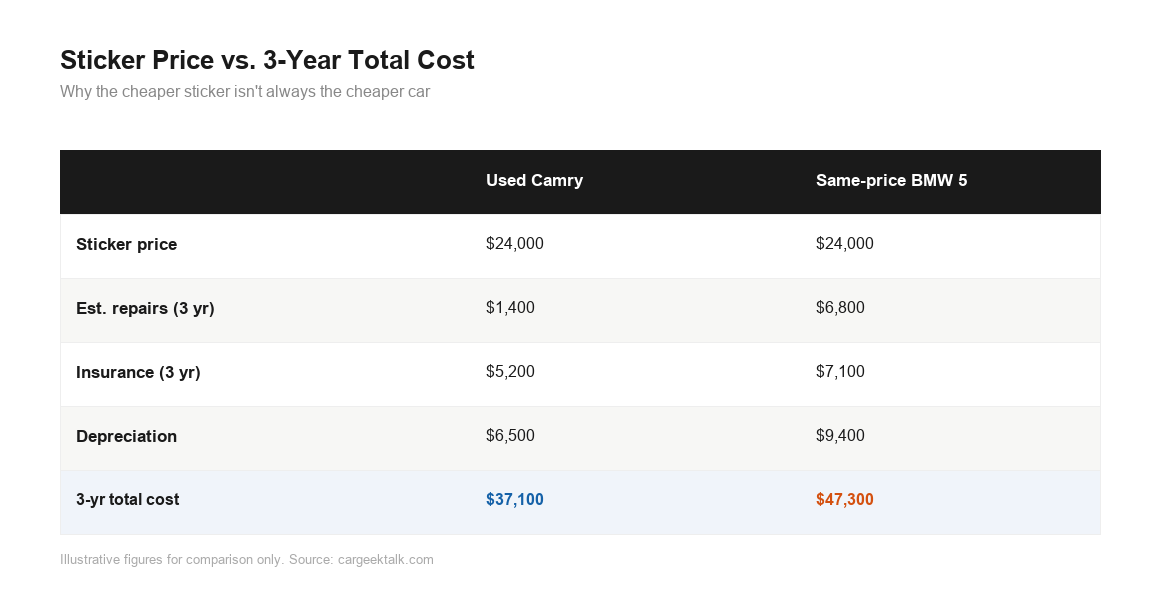
Sticker price versus three-year cost of ownership — the cheaper sticker isn’t always the cheaper car.
Should you buy now or wait?
Depends entirely on what you need. Shopping for a high-demand, reliability-first model like a Prius, CR-V, RAV4, or Civic? Waiting probably won’t hand you the dramatic price drop you’re dreaming about. Those cars hold value because too many people want the exact same thing — affordable, low-risk transportation. Everyone’s chasing the same lifeboat.
Looking at used EVs, luxury sedans, or pricier trucks instead? Patience can actually pay here. Those segments are far more exposed to market pressure, shifting incentives, and plain old buyer hesitation.
There’s a seasonal angle too. Tax-refund season tends to firm up lower-priced used values as cash buyers flood in. End-of-year often opens room to negotiate, especially when a dealer’s staring at aging inventory they want gone before the new models land. But seasonality only nudges things at the margins. It doesn’t rewrite the whole market.
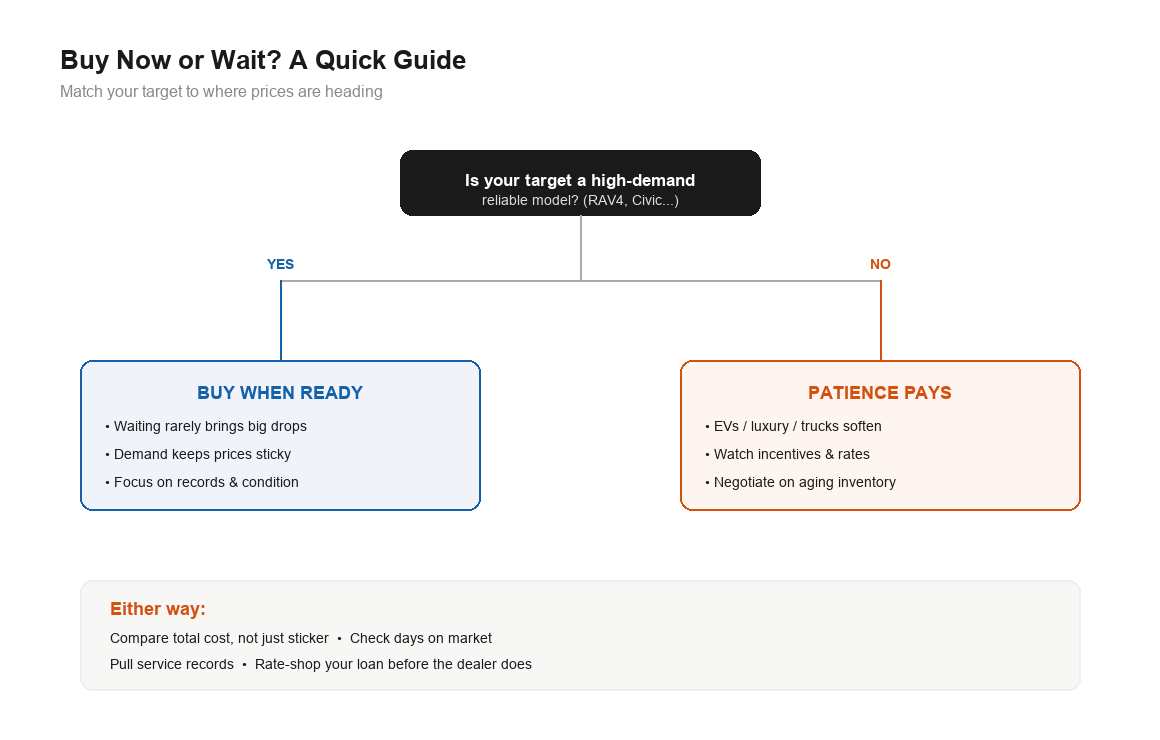
A quick decision flow for deciding whether to buy now or hold out.
Where the market goes from here
Most likely path? Continued normalization, not a dramatic crash. As new-vehicle supply keeps recovering and more trade-ins cycle back into the system, used inventory should slowly get healthier. That should ease prices further in some categories.
Still — the floor under reliable, affordable transportation may stay higher than a lot of buyers remember from the late 2010s. Inflation, climbing repair costs, and stronger demand for dependable used cars all prop that floor up. The era of endless cheap, clean, low-mileage used cars probably isn’t coming back the way it was.
For enthusiasts and practical buyers alike, that means getting pickier. The deal isn’t always the lowest asking price. Sometimes it’s the boring sedan with complete records. The unloved trim with the right engine under the hood. The hybrid that costs a little more today but saves enough over three years to justify every penny — and at 1,200 miles a month, the fuel savings alone can claw back real money, which is why our notes on squeezing more fuel efficiency out of whatever you buy are worth bookmarking.
These truths are clear: treat used car price trends like a shortcut to timing the perfect purchase and you’ll stay frustrated. Treat them like a map of where value is shifting, and you’ve got a real shot at buying something you’ll still feel good about six months down the road.
Frequently asked questions
Are used car prices going down in 2024 and beyond?
Broadly, yes — but unevenly. Used car price trends point to continued cooling from the pandemic peak, especially in trucks, used EVs, and luxury sedans. Reliable compacts and budget sedans are holding firm because payment-sensitive demand keeps that end of the market tight.
Why are some used cars still as expensive as new ones?
Lingering supply gaps from 2020–2022 reduced lease returns and trade-ins, so clean low-mileage inventory is still thin. When a one- to two-year-old car costs only a little less than new, you’re paying for scarcity — which is exactly when buying new can make more sense.
Is now a good time to buy a used car?
If you need a high-demand reliable model now, waiting rarely produces a big drop. If you’re eyeing used EVs, luxury sedans, or expensive trucks, patience can pay since those segments are more exposed to price corrections.
Do high-mileage used cars hold value now?
More than they used to. A documented one-owner car with 110,000 miles on a model known to last can pull strong money. Buyers increasingly prize maintenance history over a lower odometer reading on a riskier vehicle.
Should I worry about used EV depreciation?
It’s the biggest variable in the segment. Tax-credit changes and fast battery tech have pushed some used EVs down hard. That’s a bargain only if you verify battery health, warranty coverage, and real-world range first.