

Reimagining an Icon: Simon Lane on the Encor Series 1 and the Lotus Esprit Remaster
Contents
- Introduction
- 1. The Encor Series 1 is described as a “remaster” rather than a restomod. How do you personally define the difference between those two concepts?
- 2. Your philosophy emphasizes “respectful enhancement.” How do you decide what should remain untouched versus what should be modernized?
- 3. Why did you choose the original Lotus Esprit as your first project, and what makes it so special from a design and engineering perspective?
- 4. The car retains the original chassis identity while introducing a full carbon-fibre body. What were the biggest engineering challenges in achieving that balance?
- 5. Many modern cars are becoming increasingly digital. How did you approach integrating modern technology without losing the analogue driving experience?
- 6. The Series 1 is limited to just 50 units. What role does exclusivity play in your brand strategy and long-term vision?
- 7. Your team has experience with brands like Lotus, Aston Martin, and Koenigsegg. How did those experiences influence the development of this project?
- 8. How important is emotional connection when working on a car that already has such a strong legacy and fanbase?
- 9. The interior blends classic design cues with modern usability. What was your guiding principle when redesigning the cockpit?
- 10. With around 400 bhp and significantly improved rigidity, the car offers modern performance. How did you ensure it still “feels” like the original Esprit to drive?
- 11. Who is the ideal Encor customer? A collector, a driver, or someone in between?
- 12. Do you see Encor as a niche manufacturer, or is this the beginning of a larger movement in remastering automotive icons?
- 13. Sustainability is becoming increasingly important in the automotive world. How does re-engineering existing cars fit into that conversation?
- 14. Looking ahead, will Encor focus only on Lotus heritage, or can we expect reinterpretations of other iconic cars?
- 15. If you could summarize the Encor Series 1 in one sentence, not as a product, but as an idea, what would it be?
- Conclusion
Introduction
When it comes to reinterpreting automotive icons, most approaches fall somewhere between faithful restoration and radical restomod. But Encor Design takes a more considered path — what they define as a Lotus Esprit remaster.
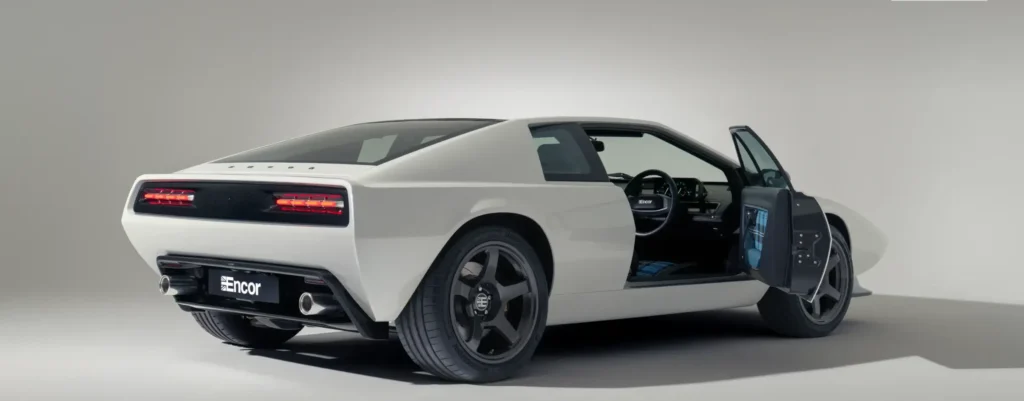
Their first project, the Series 1, is based on the legendary Lotus Esprit, yet it avoids reinventing the car’s identity. Instead, it focuses on revealing and refining what made the original so compelling, using modern engineering, materials, and precision.
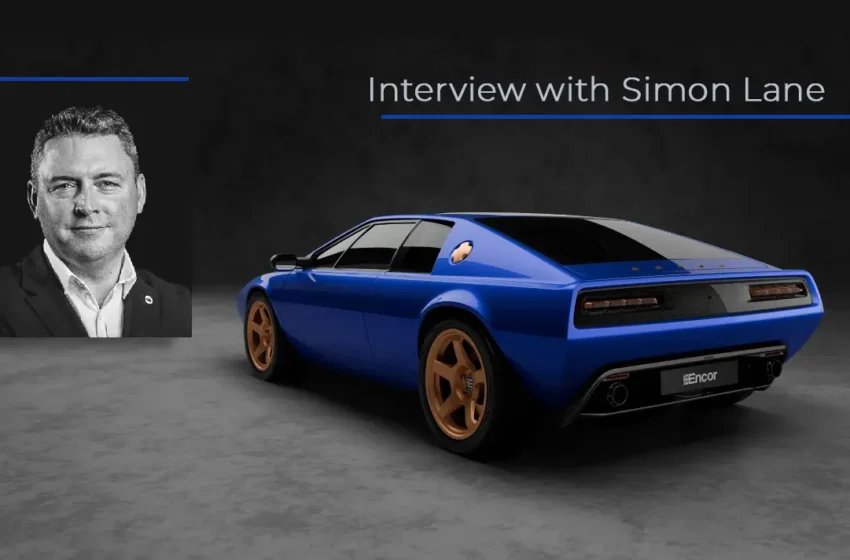
In this interview, I speak with Simon Lane, Commercial Director at Encor Design, about the philosophy behind the Lotus Esprit remaster, the challenges of development, and how to preserve an analogue driving experience in an increasingly digital world.
1. The Encor Series 1 is described as a “remaster” rather than a restomod. How do you personally define the difference between those two concepts?
For us, a restomod can sometimes mean taking a classic car and updating it with modern parts. A remaster is more disciplined than that. It is about understanding what made the original car so compelling in the first place, then using modern engineering to express that idea more faithfully.
With the Series 1, we were never interested in imposing a new personality on the Esprit. The goal was to reveal the brilliance that was already there, while addressing the limitations of the era in which it was built.
2. Your philosophy emphasizes “respectful enhancement.” How do you decide what should remain untouched versus what should be modernized?
We start by identifying the things that give the car its identity. On the Esprit, that includes the proportions, the sense of lightness, the visual drama, the compactness and the clarity of the driving experience. Those are not things to dilute.
Where we choose to intervene is in the areas where modern engineering can strengthen the ownership and driving experience without changing the soul of the car. So we improve structure, precision, usability and reliability, but we do not modernise for the sake of it.
3. Why did you choose the original Lotus Esprit as your first project, and what makes it so special from a design and engineering perspective?
The Esprit felt like the right place to begin because it is one of those rare cars where the design idea and the engineering ambition are both instantly recognisable. It has presence, but it also has purity. It looks purposeful, compact and intelligent.
What made it especially attractive to us was the sense that the original concept still feels powerful today. There was a very strong idea at the centre of that car. We believed that, handled carefully, it could be brought forward in a way that felt true to itself.
4. The car retains the original chassis identity while introducing a full carbon-fibre body. What were the biggest engineering challenges in achieving that balance?
The biggest challenge was making meaningful advances in stiffness, quality and precision without losing the balance and character that people associate with the Esprit. Once you introduce new materials and a very different level of engineering resolution, the risk is that you end up changing the car’s behaviour as much as its capability.
So the work was not simply about making it lighter or stiffer. It was about understanding how those gains would influence feel, response and driver confidence, then tuning the whole car so that it still feels connected to the original philosophy.
5. Many modern cars are becoming increasingly digital. How did you approach integrating modern technology without losing the analogue driving experience?
We took the view that technology should make the car cleaner and easier to live with, not more distant. Modern systems can improve reliability, information delivery and usability, but they should not interrupt the relationship between car and driver.
That meant being selective. We introduced technology where it genuinely improved the experience, but we were careful not to bury the driver under layers of mediation. The car still needs to feel mechanical, intimate and alive.
6. The Series 1 is limited to just 50 units. What role does exclusivity play in your brand strategy and long-term vision?
For us, limited production is a consequence of depth rather than a branding exercise. Cars developed and built to this standard cannot be done at volume without compromise.
The cap of 50 gives us the space to treat each commission properly, to maintain quality, and to protect the integrity of the programme. It also sets the tone for Encor as a company. We are not trying to be expansive for the sake of it. We are trying to be exact.
7. Your team has experience with brands like Lotus, Aston Martin, and Koenigsegg. How did those experiences influence the development of this project?
Experience in that world teaches you that great cars are not defined by one department. The best ones feel coherent. Design, engineering, craftsmanship and usability all pull in the same direction.
That influenced the Series 1 in a fundamental way. We were determined that it should feel resolved as a complete car, not like an original vehicle that had simply been upgraded in a series of disconnected areas.
8. How important is emotional connection when working on a car that already has such a strong legacy and fanbase?
It is essential. With a car like the Esprit, people are not responding only to shape or performance. They are responding to memory, meaning and the role the car has played in their imagination over time.
You have to respect that. The job is not to outshine the legacy. It is to handle it carefully enough that existing fans recognise the spirit of the original, while new owners discover what made it special in the first place.
9. The interior blends classic design cues with modern usability. What was your guiding principle when redesigning the cockpit?
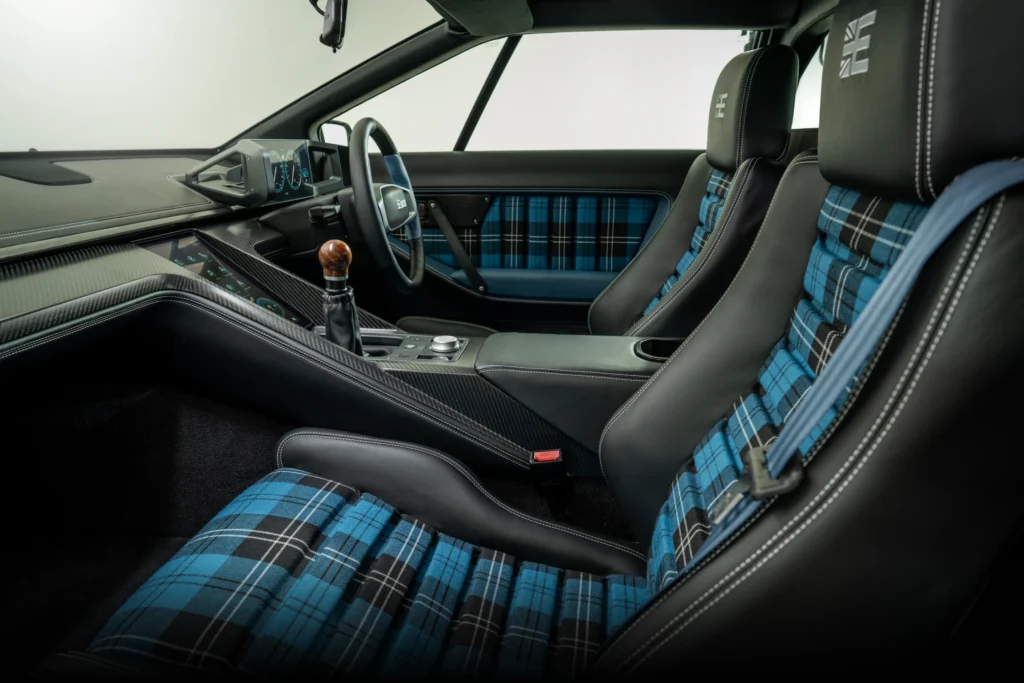
Our guiding principle was to preserve the sense of occasion without preserving the frustrations. The original interior had a strong identity and a real sense of enclosure around the driver. We wanted to keep that feeling.
At the same time, the cockpit had to work to a much higher standard in terms of comfort, finish and usability. So the redesign was about clarity, tactility and integration, making it feel special and contemporary without making it feel generic.
10. With around 400 bhp and significantly improved rigidity, the car offers modern performance. How did you ensure it still “feels” like the original Esprit to drive?
We were very conscious that the answer was not simply more power. What matters is the relationship between performance, weight, response and feedback. If any one of those moves too far out of step, you risk losing the delicacy that made the original so engaging.
So the development focus was on preserving agility, communication and sense of connection. The car had to feel sharper and more capable, certainly, but it still needed to speak in the same language as an Esprit.
11. Who is the ideal Encor customer? A collector, a driver, or someone in between?
In truth, it is usually someone in between. They may have a collector’s eye, but they also care deeply about the driving experience and the engineering behind it.
The ideal customer is someone who values originality of thought as much as rarity. Someone who understands why these cars matter, but also wants to experience that significance from behind the wheel.
12. Do you see Encor as a niche manufacturer, or is this the beginning of a larger movement in remastering automotive icons?
We are deliberately focused, but we do think there is a wider shift happening. As cars become more standardised in how they feel and interact with the driver, there is growing appreciation for machines with real tactility, personality and sense of authorship.
Encor sits within that space, but our ambition is not to chase a trend. It is to set a standard for how these cars should be re-engineered when they truly deserve it.
13. Sustainability is becoming increasingly important in the automotive world. How does re-engineering existing cars fit into that conversation?
There is something inherently responsible in taking an existing car of real significance and extending its life in a meaningful way. We are not treating these cars as disposable objects. We are preserving, improving and future-proofing them.
That does not answer every sustainability question in the automotive world, of course, but it is part of a broader mindset: making exceptional things last, and ensuring they remain relevant for future generations rather than being left behind by changing expectations.
14. Looking ahead, will Encor focus only on Lotus heritage, or can we expect reinterpretations of other iconic cars?
Our immediate focus is on doing this programme properly. That matters more than talking too quickly about what comes next.
More broadly, we are interested in cars with genuine cultural and engineering significance, but any future project would have to satisfy the same test as the Series 1: there must be a strong original idea worth preserving, and a clear reason why a remaster could honour it rather than dilute it.
15. If you could summarize the Encor Series 1 in one sentence, not as a product, but as an idea, what would it be?
It is our way of showing what happens when a great automotive idea is revisited with patience, respect and the engineering quality it always deserved.
Conclusion
The Series 1 is more than a technical upgrade — it is a carefully considered answer to what a Lotus Esprit remaster should be in today’s automotive landscape. With this project, Encor Design shows that the future of driving is not defined solely by digital innovation, but also by a deeper respect for original ideas.
As Simon Lane explains, the real challenge lies in balancing heritage with progress, and emotion with engineering precision. It is within that balance that truly meaningful cars are created.
The Encor Series 1 ultimately stands as a compelling example of how a Lotus Esprit remaster can honour the past while remaining relevant today — not by changing its voice, but by allowing it to be heard more clearly than ever before.