
Theon Design Review: The British Restomod That Builds a Better 911 Than Porsche
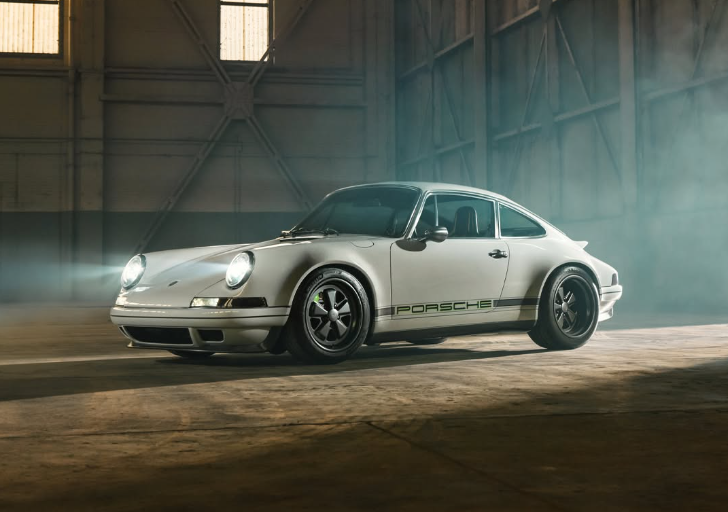
There is a small workshop in the Oxfordshire countryside — right in the heart of what the British motorsport industry calls Motorsport Valley — where a husband and wife team is doing something that most established car manufacturers cannot. They are taking a 30-year-old Porsche 911, stripping it to bare metal, and rebuilding it into something that beats the current 911 GT3 RS on power-to-weight ratio.
That workshop belongs to Theon Design. And if you have not heard of them yet, you will.
In a restomod market increasingly dominated by headline horsepower numbers and marketing budgets, Theon Design has quietly built one of the most respected names in the business — not by chasing extremes, but by applying aerospace-grade engineering discipline to the Porsche 964 platform with obsessive attention to detail. Every car takes 6,000 hours to build. Every commission is unique. And the waiting list keeps growing.
This is the full Theon Design review — covering the story behind the brand, the engineering that makes their cars special, the model range, pricing, and how they compare to Singer, Gunther Werks, and the rest of the 911 restomod world.
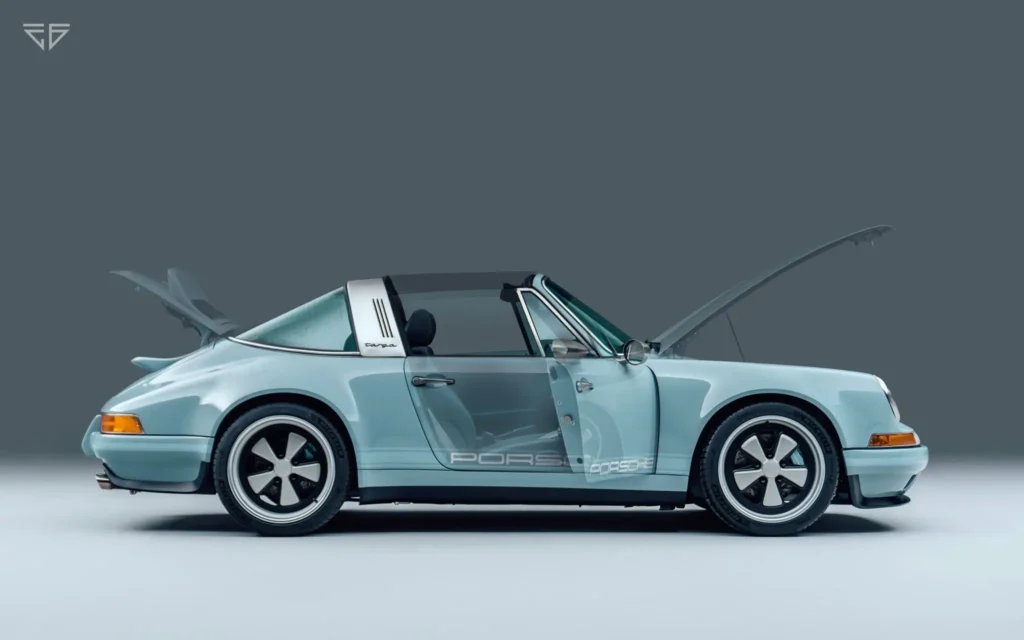
Theon Design rebuilds Porsche 964s from bare metal up — each commission taking over 6,000 hours to complete. Photo: Theon Design
Contents
- The Story Behind Theon Design
- What Theon Design Actually Builds
- Theon Design Model Range: Every Commission Explained
- The Engineering Details That Set Theon Design Apart
- Theon Design vs Singer vs Gunther Werks — How Do They Compare?
- The Theon Design Buying Process — What Clients Actually Experience
- Why the Porsche 964 Matters — And Why Theon Chose It
- Theon Design in 2026 — Where the Brand Stands Now
- Final Thoughts: Is Theon Design Worth It?
- FAQ About Theon Design
The Story Behind Theon Design
Theon Design was founded in 2016 by Adam Hawley and his wife, Lucinda Argy — and the origin story matters because it explains why the cars feel the way they do.
Hawley is not a businessman who decided to enter the luxury restomod market. He is a car designer with over two decades of experience at BMW, Lotus, Jaguar, Land Rover, and even Airbus, where he worked on the A380. He is the kind of person who spent years thinking about how cars should be made before ever touching a donor car.
The whole thing started when Hawley modified his own Porsche 964. The result was so compelling that he and Lucinda sold it to fund a business. That prototype became the foundation for everything Theon Design has built since.
The company is named after their son, Theo. It is a family business in the truest sense — which is immediately apparent when you walk through the workshop doors in Deddington, Oxfordshire. There is no corporate veneer here. Just passion, precision, and air-cooled engines.
Lucinda handles the business and marketing side, while Adam leads design and engineering. Their ethos is captured in one short phrase that appears throughout their communications: Reduce complexity and add lightness.
That philosophy shapes every single decision they make — from which steel body panels to retain (only the doors, because a classic 911 door has a sound and feel when it shuts that cannot be faked) to the choice of naturally aspirated engines over turbocharged alternatives.
What Theon Design Actually Builds
Theon Design works exclusively on the Porsche 911 964 — the generation produced from 1989 to 1994. They do not build 993s, 996s, or anything else. The 964 is their entire world, and that singular focus is a big part of why they are so good at it.
Every commission begins with a donor car. The client either provides their own 964 or Theon helps source one. A clean example currently runs anywhere from $90,000 to $150,000 before the build even starts. From there, the car is stripped completely to bare metal, and the real work begins.
Here is what actually happens during an 18-month build process:
- The chassis is reinforced with additional seam welding, dramatically improving structural rigidity
- Most steel body panels are replaced with F1-grade carbon fiber and Kevlar — except the doors, which remain steel for that unmistakable classic 911 shut sound
- The engine is rebuilt and bored out from the stock 3.6-liter to either a 3.8-liter or 4.0-liter naturally aspirated flat-six
- Bespoke Jenvey independent throttle bodies replace the original fuel injection system
- Theon’s own velocity stacks are fitted, optimizing intake sound and airflow
- The gearbox is upgraded to a 993 Carrera RS specification six-speed manual
- TracTive semi-active suspension with five driver-adjustable settings is installed
- The weight distribution is carefully reoptimized — on the most recent builds, Theon relocated the AC compressor and power steering pump to the front trunk to improve balance to an impressive 46:54 front-to-rear split
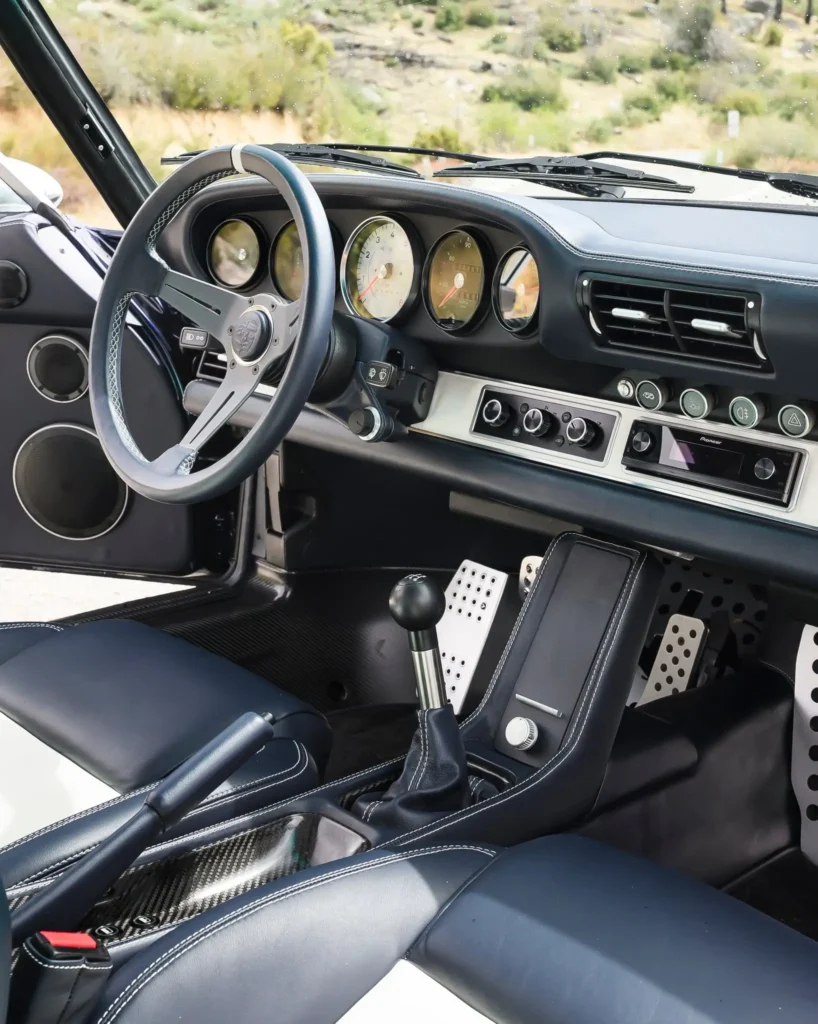
- Interior is completely bespoke — carbon-backed Recaro bucket seats, Alcantara, billet aluminum switchgear, custom dials
The result is a car that is lighter, faster, better balanced, and more engaging than the original — while still feeling unmistakably like a classic 911.
Theon Design Model Range: Every Commission Explained
Unlike most car manufacturers, Theon Design does not sell model names. Each car is a unique commission, designated by market code and build number. GBR is UK commissions, USA is the American market, ITA is Italian, and so on.
But across the range, three broad specification tiers have emerged:
The 3.8-Liter Coupe — The Starting Point
The original Theon commission format. A 3.8-liter naturally aspirated flat-six producing around 380–410 horsepower, paired with a 993 RS six-speed manual. Carbon fiber bodywork, TracTive suspension, bespoke interior. This is where the Theon story began with GBR001 and GBR002, and these cars remain the most faithful to the 964’s original character while being dramatically improved in every measurable way.
The 4.0-Liter Coupe — The Current Benchmark
The most talked-about Theon commission format right now. The engine is bored to 4.0 liters and produces 421 horsepower at 7,400 rpm, with the power-to-weight ratio beating the current 992-generation 911 GT3 RS. Curb weight sits at approximately 1,146 kg thanks to the full carbon-Kevlar body construction. This is the commission that Top Gear reviewed and CarBuzz called the car that “challenges Singer.”
Six of these will be built for the worldwide market in 2026.
The Theon R — The Extreme Version
Limited to just 24 units worldwide, the Theon R takes the formula to its logical extreme. Power rises to 500 horsepower, weight drops to 1,000 kg (roughly the same as a Mazda MX-5), and 0-60 mph happens in 3 seconds flat. Pricing starts at £790,000 — approximately $1,020,000 — not including the donor car.
The Theon R is not trying to be a daily driver. It is a rolling engineering statement.
The Targa Commissions
Starting with GBR003, Theon began producing open-top Targa commissions alongside the standard coupes. The Targa format adds complexity — maintaining structural rigidity with an open roof on a 30-year-old platform requires additional engineering — but the results have been exceptional. GBR005 was exhibited at Salon Privé Blenheim and drew enormous attention.
| Commission Type | Engine | Power | Weight | Price (from) |
|---|---|---|---|---|
| 3.8 Coupe | 3.8L N/A flat-six | ~380–410 hp | ~1,100 kg | £410,000 |
| 4.0 Coupe | 4.0L N/A flat-six | 421 hp @ 7,400 rpm | 1,146 kg | £430,000 |
| Targa | 3.8L or 4.0L N/A flat-six | 400–421 hp | ~1,190 kg | £430,000 |
| Theon R | 4.0L N/A flat-six (extreme) | 500 hp | ~1,000 kg | £790,000 |
All prices exclude donor car, shipping, and local taxes. A clean 964 donor currently adds approximately £70,000–£120,000 to the total cost.
The Engineering Details That Set Theon Design Apart
Plenty of restomod builders can fit a carbon body and a bigger engine. What makes Theon genuinely different is the depth of engineering thinking that goes into every decision — and the willingness to reject shortcuts even when nobody would notice.
Take the doors. Theon could save weight by replacing the steel doors with carbon fiber equivalents. They choose not to. The reason: a classic 911 door has a specific sound and feel when it closes. It is part of the experience. Shaving a couple of kilograms is not worth destroying that moment.
Or take the engine placement. On recent builds, Theon moved the AC compressor and power steering pump from their traditional position behind the engine to the front trunk — purely to improve weight distribution. The result is a 46:54 front-to-rear split on a rear-engine car, which is genuinely remarkable engineering for a platform not designed with that goal in mind.
The TracTive semi-active suspension system, adjustable through five settings from inside the cabin, is another detail that separates Theon from competitors. The system was developed in collaboration with specialists and tuned specifically for the 964 platform — not adapted from another car.
And then there is the build time. Each car takes approximately 6,000 man-hours to complete. At five cars per year, that is essentially the entire capacity of the workshop focused on making each commission the best it can possibly be.
In my experience selling premium cars, the brands that attract the most loyal customers are rarely the ones with the biggest numbers — they are the ones where the buyer feels that every detail has been considered on their behalf. Theon Design understands this completely.
Theon Design vs Singer vs Gunther Werks — How Do They Compare?
The 911 restomod space is genuinely competitive now, and collectors frequently ask how Theon stacks up against the two most famous names in the business. Here is an honest comparison.
| Brand | Base Car | Philosophy | Character | Price Range |
|---|---|---|---|---|
| Theon Design | Porsche 964 | Motorsport engineering, OEM-level precision | Restrained British, driver-first | £410K–£790K+ |
| Singer Vehicle Design | Porsche 964 | Artisanal refinement, maximum personalization | Expressive, luxury-forward | $1.5M–$3M+ |
| Gunther Werks | Porsche 993 | Track performance, carbon-intensive | Aggressive, race-derived | $575K–$700K+ |
The honest answer is that all three are exceptional — the choice comes down to what you want from the car and who you want to build it.
Singer has become automotive art. Their cars regularly exceed $2 million and have a visual theatricality that makes them unlike anything else on the road. If you want the most expressive interpretation of the 964, Singer is the answer. But you will pay for it, and the wait list is significant.
Gunther Werks works on the 993 rather than the 964, which is itself an important distinction for enthusiasts who prefer the last of the air-cooled generations. Their approach is more track-focused and aggressive — a racing suit rather than a tailored one.
Theon Design occupies a different space. The British press frequently calls them “the British Singer,” but that comparison undersells them. Where Singer leans into expressiveness, Theon leans into precision. Their cars are restrained in appearance — until you look closely and realize that every surface has been refined, every system reconsidered, every detail justified by engineering logic rather than aesthetics.
Crucially, Theon is also significantly less expensive than Singer while being broadly comparable in quality. That price gap is a major factor for collectors who want a world-class restomod without the seven-figure Singer bill.
If you enjoy reading about the full restomod landscape and how different builders approach the same challenge, our Car Builder Spotlight series covers some of the most fascinating boutique manufacturers in the world. We recently published an in-depth look at Encor Design and their remastered Lotus Esprit Series 1 — another British brand doing something genuinely different in the restomod space.
The Theon Design Buying Process — What Clients Actually Experience
One of the most interesting aspects of Theon Design is the commissioning process itself. Adam Hawley describes it as a collaboration rather than a transaction — and that distinction matters.
After the initial enquiry, clients enter an 18-month consultation period. During this time, they work directly with the Theon team on every aspect of the build — paint color (samples are sent across the Atlantic for approval if the client is in the US), interior specification, mechanical setup, and even individual details like the specific Fuchs wheel finish or the color of the brake calipers.
“We’re not a one-stop shop where you tick some boxes and get a car two years later,” Hawley told Top Gear. “It’s very much a collaboration. The fun is in the journey, because customers are very involved in the build.”
This level of involvement creates something valuable beyond the car itself — owners feel a genuine connection to the build process, which deepens their attachment to the finished car. It is the opposite of walking into a dealership and choosing from a configurator.
Current lead times are running at approximately two and a half years. Given that Theon builds only five or six cars per year, that wait is unlikely to shorten as demand from the US and Asian markets continues to grow.
According to data from Car & Classic’s restomod market analysis, international demand for top-tier 964 restomods has surged significantly in the past two years, with Theon Design specifically cited as a primary beneficiary of growing interest from North American and Asian collectors.
Why the Porsche 964 Matters — And Why Theon Chose It
For non-Porsche enthusiasts, it is worth understanding why the 964 specifically is such a compelling canvas for a restomod builder.
The 964 was produced from 1989 to 1994 and represented the first major modernization of the 911 platform. It introduced coil springs, power steering, and ABS to a chassis that had previously relied on torsion bars and manual everything. It was also the last generation before Porsche moved to water cooling.
That combination makes it particularly interesting for restomod work: it is modern enough to respond well to engineering improvements, yet old enough to have the analog character that enthusiasts are chasing. The air-cooled flat-six, the rear-engine layout, the manual gearbox — all of it survives intact through the Theon process, just dramatically better than Porsche originally managed with 1980s technology and production-line constraints.
When you buy a Theon Design commission, you are essentially asking: what would Porsche have built if they had access to F1-grade carbon fiber, TracTive suspension technology, and 6,000 hours to spend on a single car?
The answer is sitting in a workshop in Deddington, Oxfordshire, waiting to be shipped to its owner in Chile, Dallas, or Milan.
Theon Design in 2026 — Where the Brand Stands Now
Theon Design has quietly crossed a significant milestone. Over 20 commissions have now been completed and delivered to clients across the UK, Europe, North America, and further afield. Around half that number are currently in build at any given time.
The brand’s trajectory is unmistakably upward. International enquiries have grown substantially, particularly from the US and Asia. The Theon R — the most extreme model at £790,000 — was announced with 24 units available globally and generated significant attention from collectors who had previously only looked at Singer.
Mechanically, the cars keep getting better. Each successive commission benefits from engineering refinements developed on previous builds — better weight distribution, improved cooling, refined throttle response. The 4.0-liter builds that are coming out of Deddington in 2026 are measurably better drivers’ cars than the original 3.8-liter commissions from 2020.
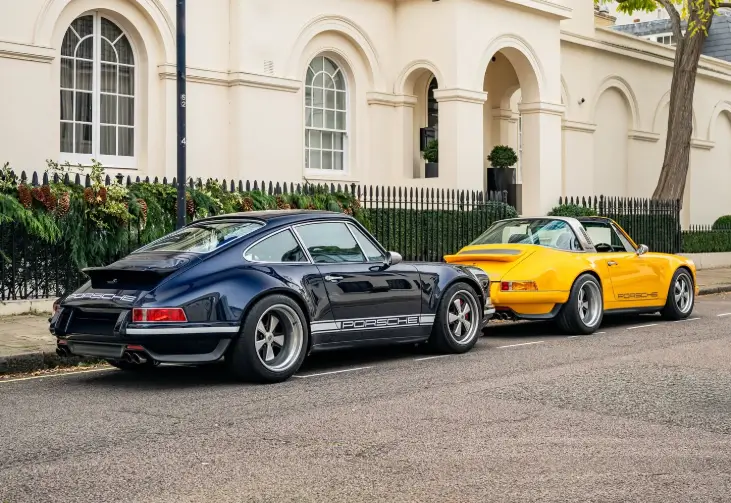
What Theon has managed, which most boutique car builders never achieve, is a genuine engineering cadence — a continuous improvement process that mirrors how a proper manufacturer iterates, but applied to hand-built, bespoke cars. That combination of craft and engineering discipline is rare.
For buyers who are serious about the 964 restomod space, Theon Design deserves to be on any shortlist alongside Singer. The prices are lower. The engineering is comparable. And the character of the cars — restrained, precise, deeply driver-focused — is something that appeals strongly to the kind of collector who finds Singer’s theatricality too much.
If you are thinking about what it actually costs to own and maintain a car like this, our guide on average car repair costs by brand puts the ownership economics of specialist and exotic vehicles into useful context.
Final Thoughts: Is Theon Design Worth It?
In the restomod world, “worth it” is a complicated question. These are not cars you buy because they make financial sense. They are cars you commission because you want to drive the best possible version of an air-cooled 911, and you are willing to invest both money and 18 months of your time in the process.
Theon Design earns its price in a way that very few boutique builders manage: through genuine engineering depth. This is not a company that fits a body kit and charges a premium. This is a company that moves the engine ancillaries to improve weight distribution by a measurable percentage, that retains steel doors for acoustic reasons, that develops its own velocity stacks rather than using off-the-shelf parts.
The result is a car that outperforms the modern 911 GT3 RS on power-to-weight while feeling like the classic 964 you always imagined driving. That is an extraordinary achievement from a team of enthusiasts working out of a workshop in the English countryside.
Whether Theon Design becomes a household name in the way Singer has is an open question. The brand’s restrained aesthetic and deliberately limited output mean they will never dominate social media in the way Singer does. But among serious collectors and driving enthusiasts, the reputation is already established.
And for those who know, that is exactly the point.
FAQ About Theon Design
What is Theon Design?
Theon Design is a British restomod workshop based in Deddington, Oxfordshire, founded in 2016 by designer Adam Hawley and his wife, Lucinda Argy. The company specializes exclusively in bespoke commissions based on the Porsche 911 964 generation, produced from 1989 to 1994.
How much does a Theon Design commission cost?
Theon Design commissions start at approximately £410,000 for a 3.8-liter coupe. The 4.0-liter coupe and Targa models start at around £430,000. The range-topping Theon R starts at £790,000. All prices exclude the donor car, which adds approximately £70,000–£120,000, as well as shipping and local taxes.
How long does a Theon Design build take?
Each Theon Design commission takes approximately 6,000 man-hours of work over an 18-month build period. Current lead times are running at around two and a half years from commissioning to delivery.
How does Theon Design compare to Singer Vehicle Design?
Both companies work on the Porsche 964, but they take different approaches. Singers are more expressive and theatrically styled, with prices regularly exceeding $1.5–2 million. Theon is more restrained and engineering-focused, with commissions starting significantly lower. Theon is frequently described as “the British Singer” — accurate in terms of quality, but the character of the cars is quite different.
How many cars does Theon Design build per year?
Theon Design builds approximately five to six commissions per year. Over 20 cars have been delivered globally since the company’s founding in 2016, with clients in the UK, Europe, North America, and South America.
Does Theon Design beat the Porsche 911 GT3 RS?
On power-to-weight ratio, yes. The current 4.0-liter Theon commission produces 421 horsepower and weighs approximately 1,146 kg, giving a power-to-weight ratio of around 367 hp per tonne — superior to the 992-generation 911 GT3 RS. The Theon R, at 500 hp and approximately 1,000 kg, extends that advantage further.
Where is Theon Design based?
Theon Design operates from Deddington, Oxfordshire, England — in the heart of the UK’s Motorsport Valley, the area around Silverstone that is home to a significant concentration of motorsport engineering expertise.
This article is part of our Car Builder Spotlight series, where we cover unique automotive manufacturers, restomod builders, and boutique performance brands from around the world. If you represent a car manufacturer or boutique brand and would like to be featured on CarGeekTalk, feel free to contact us. CarGeekTalk collaborates with selected automotive brands on editorial content, storytelling, and enthusiast-focused media projects.